
Omni-Man vs Homelander: Who Would Win in a Death Battle?
Omni-Man vs Homelander is the superhero matchup that fans of both Invincible and The Boys have been demanding since both properties exploded in popularity. You’ve got Nolan Grayson a Viltrumite warrior who spent decades masquerading as Earth’s greatest hero before revealing he’s a genocidal conqueror squaring off against John Homelander, a deeply unstable corporate-manufactured weapon who’s never faced a threat he couldn’t vaporize.
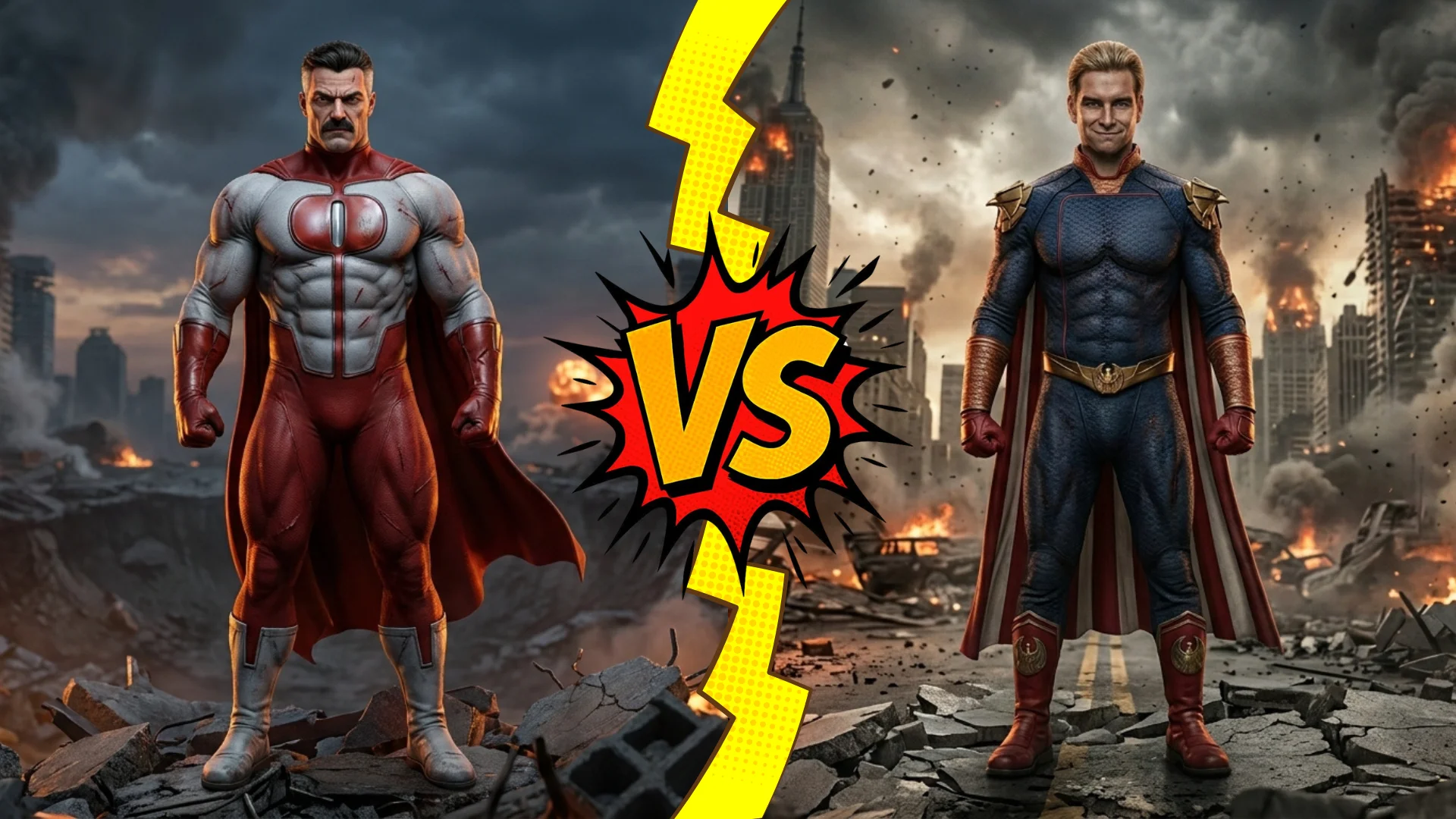
The debate splits communities because both characters share a surface-level power set flight, strength, durability, laser eyes but the gap between their actual ceilings is significant once you dig into the feats. Viltrumite biology operates on rules that Compound V-enhanced humans simply weren’t designed to match.
How Strong Is Omni-Man?
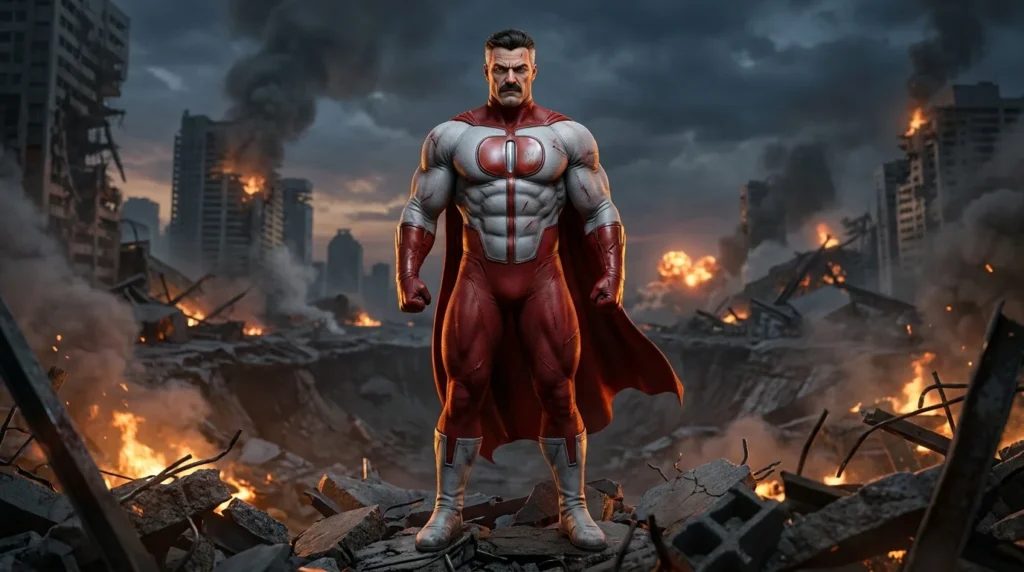
Omni-Man is a full-blooded Viltrumite, which means his strength scales to the kind of output that lets him fight entire armies of similarly powered beings across open space.
His feats include destroying a planet single-handedly, surviving combat with multiple Viltrumites simultaneously, and growing stronger as he ages rather than weakening.
Fan tip: When scaling Omni-Man, distinguish between his comic feats and his Amazon animated series portrayal. The comic version has more documented high-end showings always specify which version you’re debating with.
How Strong Is Homelander?
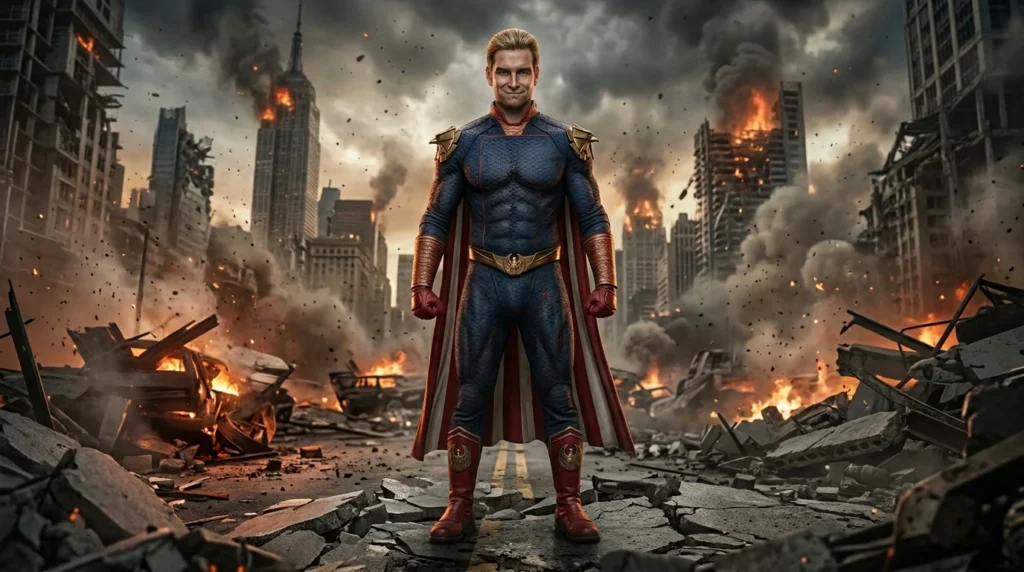
Homelander is the most powerful Compound V-enhanced human ever created stronger than every other Supe in Vought’s entire roster by a significant margin.
His heat vision has been shown melting steel and aircraft in seconds, and his physical strength lets him casually dismember other Supes who are themselves superhuman. That’s a real baseline.
Fan tip: Homelander’s comic version and TV version differ meaningfully in some showings. The Amazon series keeps his feats grounded in a more realistic register use TV Homelander for TV Omni-Man comparisons to keep the scaling consistent.
Can Homelander Beat Omni-Man?
Straightforwardly no. Homelander simply doesn’t have the physical output, durability ceiling, or combat experience to put Omni-Man down across most scenarios.
His best chance would involve a sustained heat vision assault before Omni-Man closes distance. Once this becomes a close-quarters exchange, Homelander’s durability becomes the limiting factor.
Verdict: Omni-Man wins this matchup clearly. Homelander is dangerous and fast, but Viltrumite biology places Nolan in a tier Compound V can’t manufacture its way into.
Omni-Man vs Homelander Power Level Comparison
| Category | Omni-Man | Homelander |
|---|---|---|
| Strength | Planetary destroys worlds bare-handed | Peak human+ dismembers Supes casually |
| Speed | Faster than light interstellar travel | Mach-level extreme by human standards |
| Durability | Survives planetary destruction and space combat | High resists conventional weapons, not Viltrumite punches |
| Battle IQ | Centuries of real warfare experience | Tactically underdeveloped relies on raw power |
| Stamina | Virtually limitless Viltrumite biology | Extraordinary but has human-derived limits |
| Hax Abilities | Viltrumite physiology, anti-matter manipulation scaling | Heat vision, flight, superhuman senses |
| Attack Potency | Planet-busting at documented peak output | City-block level at maximum effort |
| Experience | Centuries of galactic conquest and warfare | Decades mostly against weaker Supes and humans |
Who Is Stronger: Omni-Man or Homelander?
Omni-Man is stronger and the gap isn’t as close as the surface-level power set comparison makes it appear initially. Viltrumite strength operates on a different scale entirely.
The real advantage comes from Omni-Man’s centuries of actual combat experience against opponents who matched or exceeded his own power level. Homelander has never genuinely been tested that way.
Omni-Man vs Homelander Strength and Durability Comparison
Strength Gap Between Viltrumite and Compound V
Omni-Man destroyed a planet through sheer physical force in the comics. Homelander’s best strength feats involve dismembering other Supes and stopping aircraft different ballpark entirely.
Compound V creates powerful superhumans, but Viltrumite biology is the product of thousands of years of selective genetic warfare. That’s a fundamentally different origin and ceiling.
Durability and Damage Absorption
Homelander’s durability is real conventional weapons don’t scratch him, and he’s survived energy attacks from other Supes. That matters against most opponents he’d ever realistically face.
Omni-Man has survived punches from beings at his own power tier, deep space combat, and planetary-scale destruction events. Homelander’s durability has never been tested anywhere near that register.
Can Homelander Survive Omni-Man’s Punches?
Probably not for long. Omni-Man’s punch output scales to the kind of force that visibly deforms other Viltrumites beings who are themselves planetary-tier durable.
Homelander’s durability is impressive within The Boys’ power scale, but it’s not a scale that was ever designed to absorb Viltrumite-level kinetic force exchanges. The math doesn’t work in his favor.
Omni-Man’s Viltrumite Powers Explained
| Transformation/Ability | Description or Power Increase | Major Advantage / Battle Impact |
|---|---|---|
| Viltrumite Physiology | Genetically engineered for centuries of warfare | Strength, speed, and durability far exceed standard superhumans |
| Age-Based Power Growth | Gets stronger with age rather than weaker | Centuries of aging means current Nolan is near peak output |
| Superhuman Healing Factor | Recovers from catastrophic damage mid-combat | Can absorb punishment and continue fighting where others stop |
| FTL Flight | Travels between star systems under own power | Speed advantage closes distance before energy attacks can be sustained |
| Combat Mastery | Centuries of real warfare across multiple planets | Tactical experience against opponents who matched his power level |
What makes Viltrumite physiology uniquely difficult to counter is that every individual stat strength, speed, durability, healing is operating at a level that most superhumans from other universes can’t access through enhancement alone. It’s not one broken ability. It’s everything at once.
The age-based power growth is specifically worth flagging. Omni-Man at the start of Invincible is already centuries old and near his prime. He’s not a young Viltrumite working toward his ceiling he’s operating close to it right now.
Homelander’s Heat Vision and Flight Powers Explained
| Transformation/Ability | Description or Power Increase | Major Advantage / Battle Impact |
|---|---|---|
| Heat Vision | Solar-energy laser beams from both eyes | Only ranged option best chance against a closing Viltrumite |
| Superhuman Strength | Peak Compound V enhancement strongest Supe created | Enough to fight other Supes, insufficient against Viltrumite baseline |
| Flight | Mach-level aerial movement and combat | Mobility tool allows range management and tactical repositioning |
| Superhuman Senses | X-ray vision, enhanced hearing, long-range detection | Situational awareness advantage in complex environments |
| Invulnerability | Resists conventional weapons and most energy attacks | Durable enough to survive initial exchanges, not sustained Viltrumite output |
Homelander’s heat vision is genuinely his most interesting weapon in this matchup it’s the one tool he has that doesn’t require closing distance with a physically superior opponent. A sustained heat vision assault from range is the only scenario where he meaningfully threatens Omni-Man.
The problem is that Omni-Man is faster than Mach-level flight by a significant margin. The window where Homelander can sustain ranged attacks before Omni-Man reaches him is very narrow, and once the fight becomes physical, the durability gap becomes decisive.
Who Is Faster: Omni-Man or Homelander?
Omni-Man is faster not by a small margin but by an enormous one. FTL interstellar travel versus Mach-level atmospheric flight aren’t comparable speed tiers.
This speed gap is one of the most important factors in the matchup because it means Homelander cannot effectively create or maintain distance. Omni-Man dictates where the fight happens.
Omni-Man vs Homelander Battle IQ Comparison
Omni-Man wins this category decisively. Centuries of actual warfare against opponents at his own power level means he’s encountered and solved problems Homelander has never faced.
Homelander’s battle IQ is low he’s used to being the most powerful thing in any room, which means he’s never been forced to develop real tactical depth or creative problem-solving under pressure.
Battle IQ edge: Omni-Man by a wide margin. His experience fighting Viltrumite-tier opponents gives him a tactical library Homelander has never had reason to build.
Omni-Man’s Greatest Feats in Invincible
| Feat | Scaling Result |
|---|---|
| Destroying a planet using physical force alone | Confirms planetary-level attack potency at documented output |
| Surviving simultaneous combat with multiple Viltrumites | Durability confirmed against his own power tier |
| Traveling between star systems under his own power | FTL speed established as baseline movement, not a burst |
| Dismantling the Guardians of the Globe alone in minutes | Casual dominance over a full team of peak superhumans |
Homelander’s Best Feats in The Boys
| Feat | Scaling Result |
|---|---|
| Melting aircraft and armored vehicles with heat vision | Energy output sufficient to threaten military-grade targets at range |
| Physically dismembering other Compound V Supes | Strength confirmed well above peak-human Supe baseline |
| Surviving direct attacks from Soldier Boy’s energy blasts | Durability withstands energy attacks designed to strip Supe powers |
| Outflying military jets and operating in combat at altitude | Speed and aerial control exceed conventional aircraft performance significantly |
Why Omni-Man Is One of the Strongest Viltrumites
Omni-Man sits near the top of Viltrumite rankings a species where every member is already a planetary-tier weapon. That context matters enormously for scaling discussions.
His centuries of age combined with genuine combat experience against galactic-scale threats makes him more than just physically powerful. He’s the whole package strength, speed, experience, and ruthlessness.
Why Homelander Is The Boys’ Most Dangerous Supe
Homelander is terrifying within The Boys’ universe because there’s no countermeasure the closest anyone gets is Soldier Boy, and even that requires specific power-stripping conditions to work.
His danger isn’t just his power set it’s the combination of that power with extreme psychological instability. He’s unpredictable in ways that even physically superior opponents would need to account for.
Omni-Man vs Homelander in Comics vs TV Scaling
Here’s where things get genuinely interesting for the debate community. Comic Omni-Man has more explicitly documented high-end feats than his Amazon animated version, which keeps some showings more grounded.
TV Homelander similarly operates in a more realistic power register than some comic interpretations. The most fair comparison keeps both in their TV/animated versions that’s where the communities actually debate this matchup most actively.
Fan tip: Comic vs TV debates for both characters can shift the outcome if you cherry-pick the highest version of one and the most restricted version of the other. Always establish which continuity you’re using for both characters simultaneously.
Best Omni-Man vs Homelander Fan Debates
The most persistent community argument centers on whether Homelander’s heat vision could actually damage Omni-Man enough to matter, given that Viltrumite durability isn’t explicitly tested against energy-based attacks often.
The other recurring debate is about psychology Homelander’s instability is sometimes argued as a wildcard that could produce an unexpected result against an opponent who underestimates mental unpredictability as a tactical factor.
Who Would Win: Omni-Man vs Homelander Final Verdict

Omni-Man wins this matchup and it’s not particularly close once you move past the surface-level similarity in their power sets. Viltrumite biology, centuries of real combat experience, and a speed advantage that prevents Homelander from ever dictating range combine into an overwhelming package.
Homelander’s best scenario involves landing sustained heat vision before Omni-Man reaches him and hoping that Viltrumite durability has a lower ceiling against energy attacks than physical strikes. It’s a real argument but it requires perfect conditions that Homelander’s tactical instincts likely wouldn’t create even if the opportunity existed.
Final Verdict: Omni-Man wins approximately 8.5 to 9 out of 10 scenarios. Homelander’s one shot requires a perfect ranged opening that Omni-Man’s speed makes nearly impossible to establish.
Fan Debates About Omni-Man vs Homelander
The energy attack debate is the one that stays genuinely unresolved Viltrumites aren’t frequently shown taking sustained energy damage, which gives the heat vision argument more traction than most counterarguments in this matchup.
The psychological wildcard debate is the other thread that keeps circulating Homelander’s instability sometimes produces moves that rational, experience-driven fighters don’t anticipate, and that’s a real tactical uncertainty worth acknowledging.
How to Compare These Characters Accurately
The Omni-Man vs Homelander Canon Problem
Both characters exist in separate universes with no shared power system, which means every comparison requires translating between incompatible scaling frameworks. That’s a genuine limitation.
The most productive approach is to anchor the debate in their most consistent TV/animated versions and evaluate specific feat categories strength, speed, durability, experience independently rather than trying to find a single unified tier list.
The power gap is real and significant in most categories, but the debate stays interesting because Homelander’s energy projection represents a type of attack that Omni-Man’s combat history doesn’t specifically address. Acknowledging that uncertainty makes the discussion more honest and more engaging.
Popular Abilities, Forms, or Weapons
| Weapon / Ability | Special Ability | Advantage |
|---|---|---|
| Viltrumite Physiology (Omni-Man) | All physical stats elevated to planetary tier | Sets the baseline above what Compound V can produce |
| Age-Based Power Growth (Omni-Man) | Becomes stronger with centuries of aging | Current Nolan is near his actual ceiling not a young fighter |
| FTL Flight (Omni-Man) | Interstellar movement under own power | Speed advantage eliminates Homelander’s range management options |
| Heat Vision (Homelander) | High-temperature solar energy beams | Only meaningful threat before Omni-Man closes combat distance |
| Compound V Peak Strength (Homelander) | Strongest Supe produced by Vought program | Impressive within The Boys scale insufficient against Viltrumite output |
| Psychological Unpredictability (Homelander) | Emotional instability creates erratic tactical behavior | Wildcard factor experienced fighters sometimes underestimate instability |
Frequently Asked Questions
Read: The Flash vs A-Train
Read: Captain America vs Soldier Boy
Read: Superman vs Homelander
Read: Yujiro Hanma vs Musashi Miyamoto
Read: Superman vs Saitama
Conclusion
The Omni-Man vs Homelander debate delivers a clear winner in Omni-Man Viltrumite biology and centuries of real combat experience are simply too much for Compound V to bridge. That said, Homelander’s heat vision and tactical unpredictability keep this from being a completely one-sided conversation. Drop your take below does Homelander’s heat vision change the outcome, or is Omni-Man just built different on every level?

One Comment