
How Emerging Technologies Are Changing the Economics of IT Management
Technology has become one of the most important factors influencing how businesses operate, compete, and grow. From cloud computing and artificial intelligence to automation and advanced cybersecurity systems, emerging technologies are changing not only how organizations use IT but also how they budget for it, manage resources, and measure its value. Traditional IT management often relied on substantial upfront investments in hardware, software licenses, data centers, and permanent technical staff. Today, businesses have more flexible options for accessing technology, managing infrastructure, and obtaining specialized expertise.
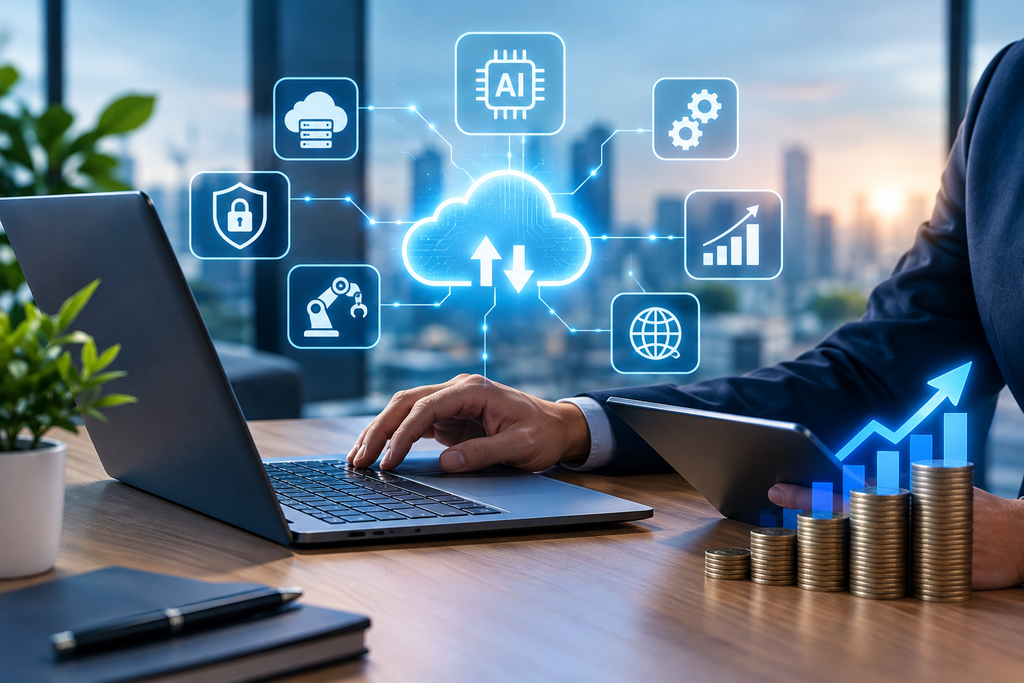
These changes are reshaping the economics of IT management. Instead of evaluating technology primarily through its purchase price, organizations increasingly need to consider its total cost of ownership, scalability, operational risks, workforce requirements, and contribution to business performance. Decisions about infrastructure, staffing, software, and external expertise are becoming closely connected to broader business strategy.
Understanding these economic changes can help business leaders make more informed technology investments, allocate resources effectively, and build IT operations that support long-term organizational goals.
The Shift From Traditional IT Spending to Flexible Technology Models
Historically, many organizations maintained their own servers, networking equipment, storage systems, and software infrastructure. Establishing these environments required significant initial capital expenditure, along with ongoing spending on electricity, physical space, maintenance, upgrades, and technical personnel. Businesses also had to estimate future demand when purchasing equipment, which could result in either unused capacity or insufficient resources during periods of growth.
Cloud computing has changed this financial model by allowing companies to access computing power, storage, databases, and other services through external platforms. Rather than purchasing every component in advance, organizations can obtain resources according to their operational needs and, where appropriate, pay based on usage or subscription arrangements.
This approach can reduce upfront investment and make it easier to adjust capacity as business requirements change. A company experiencing seasonal demand, for example, may increase computing resources during busy periods and reduce them when activity declines. However, flexibility does not automatically guarantee lower costs. Poorly configured cloud environments, unused resources, expensive data transfers, and unpredictable consumption can increase expenditure.
Consequently, modern IT management requires continuous financial oversight. Organizations need to evaluate cloud usage, identify underutilized resources, establish spending controls, and compare ongoing service costs with the long-term economics of owning and maintaining infrastructure.
The central change is not simply that businesses are spending less on technology. It is that technology expenditure is becoming more dynamic, making financial planning and resource management increasingly important.
Artificial Intelligence Is Changing the Cost of IT Operations
Artificial intelligence is introducing new ways to manage technical workloads, analyze operational information, and support decision-making. AI-powered systems can help identify unusual network activity, summarize system logs, classify support requests, detect potential performance problems, and assist technicians with routine troubleshooting.
These capabilities can improve productivity by reducing the time employees spend on repetitive tasks. IT support teams, for instance, may use AI-assisted tools to categorize incoming tickets, recommend solutions for common issues, and direct complex cases to the appropriate specialists. Monitoring systems can also analyze large volumes of operational data to identify patterns that might otherwise require extensive manual investigation.
The economic benefit depends on how these technologies are implemented. Automation may reduce the amount of manual effort required for certain activities, but organizations must account for implementation costs, software subscriptions, employee training, integration work, data governance, and ongoing supervision. AI-generated recommendations can also be inaccurate, so human review remains important for consequential technical decisions.
AI introduces additional infrastructure considerations as well. Advanced workloads may require specialized processors, greater computing capacity, additional storage, and more careful data management. Businesses must evaluate whether the expected productivity gains justify these expenses.
The most effective approach is to identify specific operational problems before selecting an AI solution. Measuring changes in ticket resolution time, system availability, employee workload, and cost per support request can help organizations determine whether an implementation is delivering measurable value.
Cloud Computing and the Importance of Cost Visibility
Cloud computing has made advanced technology accessible to organizations that previously lacked the budget or technical capacity to build their own infrastructure. Small and medium-sized businesses can now use enterprise-grade databases, analytics platforms, backup systems, and application hosting without establishing a large physical IT environment.
However, the financial implications of cloud adoption extend beyond the monthly subscription or usage bill. Different pricing models, storage requirements, data transfer charges, software dependencies, and performance demands can make costs difficult to predict. As organizations adopt more cloud services, understanding where money is being spent becomes as important as selecting the right technology.
This has encouraged the growth of FinOps, a practice that brings engineering, finance, and business teams together to manage technology spending and maximize its business value. The FinOps Foundation describes it as an operational framework that promotes financial accountability and data-driven decisions across technology usage.
For IT managers, this means evaluating costs in relation to actual business outcomes. Instead of looking only at the total cloud bill, a company might measure the cost of processing an order, hosting an active customer, delivering a software feature, or supporting a particular business unit. Such measurements help reveal whether technology investments are becoming more efficient as the organization grows.
Cost visibility also supports better purchasing decisions. If a cloud application is becoming unnecessarily expensive, managers can investigate whether resources are oversized, workloads can be scheduled more efficiently, or an alternative architecture would provide better value. The objective is to control spending without sacrificing reliability, security, or the customer experience.
Automation Is Reshaping IT Staffing and Productivity
Automation is changing the relationship between IT expenditure and workforce capacity. Routine activities such as software deployment, system monitoring, account provisioning, patch scheduling, backup verification, and incident notifications can increasingly be handled through automated workflows.
Previously, many of these activities required employees to perform repetitive checks and manual procedures. Automation allows organizations to standardize processes and reduce the amount of time required to complete them. This can help IT teams focus on higher-value work, including infrastructure planning, security improvements, system integration, and business technology projects.
Nevertheless, automation does not eliminate the need for skilled personnel. Automated workflows must be designed, tested, documented, monitored, and updated as systems change. Poorly configured automation can also spread errors quickly or interrupt critical services if safeguards are inadequate.
The economic benefit therefore depends on how much manual work is removed, how reliable the automated process becomes, and what employees do with the time they recover. A business that automates routine support tasks but fails to redirect its technical staff toward meaningful priorities may see less value than expected.
Organizations should assess automation through measurable indicators such as time saved per task, frequency of recurring incidents, deployment failure rates, and the number of manual interventions required. These measures provide a clearer picture of whether automation is reducing operating costs or simply introducing another layer of technology to maintain.
Cybersecurity Has Become a Core Economic Consideration
Cybersecurity is no longer simply a technical responsibility handled separately from financial planning. Data breaches, ransomware incidents, service interruptions, and unauthorized access can affect revenue, customer confidence, legal obligations, and business continuity. As organizations adopt cloud services, connected devices, AI applications, and distributed work environments, their security requirements can become more complex.
Emerging security technologies help businesses identify suspicious activity, enforce access policies, automate certain monitoring tasks, and improve incident response. Centralized logging, endpoint detection, identity management, multifactor authentication, and automated security alerts can strengthen an organization’s ability to detect and respond to threats.
These capabilities require investment in technology, employee training, maintenance, and governance. Businesses must also consider the financial consequences of inadequate protection. A security solution should therefore be evaluated not only by its purchase price but also by the risks it helps reduce, the systems it protects, and the operational effort needed to maintain it.
The National Institute of Standards and Technology provides an AI Risk Management Framework to help organizations identify, assess, and manage risks associated with artificial intelligence. Its guidance highlights the importance of addressing trustworthiness and risk throughout the design, deployment, and use of AI systems.
For IT managers, the wider lesson is that security spending should be aligned with business exposure. A company handling sensitive customer information may require stronger controls than a business operating a low-risk internal application. Risk assessments, access reviews, incident response planning, and regular testing help determine where security investment is most valuable.
The Changing Economics of IT Talent
The cost of technology management is influenced not only by infrastructure and software but also by the availability of skilled professionals. Businesses increasingly need expertise in cloud architecture, cybersecurity, data engineering, AI implementation, application integration, and regulatory compliance. Recruiting and retaining specialists in every technical discipline can be difficult, particularly for smaller organizations.
Maintaining a large internal team provides direct control over priorities, institutional knowledge, and technology decisions. However, it also involves salaries, benefits, recruitment, training, management, and the time required to develop specialized skills. Some roles may not require full-time attention throughout the year, making a permanent staffing model less economical for certain activities.
Emerging technologies are creating additional workforce challenges because skills that are valuable today may need to be updated as platforms, security threats, and software development practices evolve. Continuous training is essential, but it also adds to the overall cost of maintaining technical capabilities.
Businesses are therefore reconsidering how they combine permanent employees, automation, specialist contractors, and external technical providers. The objective is not necessarily to reduce the number of employees. It is to ensure that the organization has the right expertise available when needed while maintaining effective oversight of its technology environment.
How IT Outsourcing Fits Into the New Technology Economy
As technology becomes more specialized, organizations have more options for obtaining technical expertise without building every capability internally. An IT Outsourcing Service can provide access to external professionals for activities such as infrastructure management, technical support, cloud administration, cybersecurity operations, software maintenance, and project-based implementation.
The economic appeal of outsourcing comes from the possibility of accessing skills and operational capacity without recruiting an entire permanent team for every requirement. A business may, for example, retain an internal IT manager while obtaining external support for network monitoring, application maintenance, or cloud infrastructure administration.
This model can be especially useful when a company needs specialized expertise for a limited period or requires technical coverage beyond the capacity of its existing employees. It may also help organizations manage workload fluctuations and reduce delays caused by difficult-to-fill technical vacancies.
However, outsourcing is not automatically less expensive than internal management. Service fees, contract minimums, implementation costs, transition arrangements, vendor oversight, and additional charges for work outside the agreed scope can affect the overall economics. Businesses must also consider service quality, data protection, response times, documentation, and their ability to change providers if requirements evolve.
A meaningful comparison should examine the complete cost of each operating model. This includes internal salaries and benefits, technology licenses, infrastructure, training, management time, external service fees, transition expenses, and the financial impact of potential downtime. Comparing only an outsourcing quote with an employee’s salary can produce a misleading result.
The most appropriate arrangement depends on the organization’s size, risk profile, technical requirements, internal capabilities, and strategic priorities. For some businesses, a fully internal IT function will remain the best option. Others may benefit from a hybrid approach that combines internal decision-making with external technical delivery.
Edge Computing and the Cost of Data Processing
Edge computing is another development influencing technology economics. Instead of sending every piece of data to a centralized cloud environment, edge computing processes some information closer to where it is generated. This can be useful in manufacturing facilities, retail environments, connected devices, transportation systems, and applications that require rapid responses.
Processing data locally can reduce latency and may lower the volume of information transferred to centralized infrastructure. For example, a manufacturing operation may analyze equipment data on-site to identify unusual operating conditions without continuously sending every raw data point to the cloud.
However, edge computing introduces its own costs. Businesses may need local computing devices, specialized software, physical security, remote monitoring, and maintenance procedures across multiple locations. Managing distributed infrastructure can be more complicated than operating a smaller number of centralized systems.
The decision to adopt edge computing should therefore be based on workload requirements rather than the assumption that local processing is inherently cheaper. Organizations should compare hardware and maintenance costs with the potential benefits of reduced latency, lower data transfer requirements, improved local availability, and more efficient data processing.
Software-as-a-Service and the Economics of Technology Access
Software-as-a-Service (SaaS) has changed how organizations purchase and maintain business applications. Instead of installing and managing every application on their own infrastructure, companies can subscribe to hosted platforms for customer relationship management, accounting, communication, human resources, analytics, and project management.
This model can reduce the need for local installation, infrastructure maintenance, and certain software upgrade activities. Vendors generally manage the underlying application infrastructure, while customers access the software through a browser or supported application.
Subscription-based software also creates financial challenges. As departments adopt separate tools, an organization can accumulate overlapping subscriptions, unused licenses, and additional charges for advanced features or increased usage. Individual subscription fees may appear small, but their combined cost can become substantial.
Effective SaaS management involves maintaining an inventory of applications, reviewing license utilization, consolidating redundant tools, and understanding renewal conditions. IT teams should also evaluate integration requirements, data portability, access controls, and the consequences of discontinuing a service.
The key economic question is whether a software subscription provides enough operational value to justify its recurring cost. Applications should be assessed against measurable needs, rather than retained simply because they have become part of an organization’s established workflow.
Measuring the Return on Technology Investment
As IT management becomes more complex, organizations need a consistent method for evaluating the value of technology investments. Traditional budgeting often emphasizes acquisition costs and annual operating expenses. Although these figures remain important, they do not fully capture improvements in productivity, service quality, business continuity, or decision-making.
Return on investment (ROI) can help compare the expected financial benefits of a technology initiative with its total cost. For example, if an automation project reduces repetitive work, the organization can estimate the value of the time saved, subtract implementation and maintenance expenses, and compare the result with the original investment.
However, not every technology benefit can be expressed directly in financial terms. Better security, improved customer satisfaction, stronger compliance, and reduced operational risk may provide substantial value without generating immediate revenue. These outcomes should be evaluated alongside direct financial returns.
A practical IT investment assessment should consider several factors:
- Total cost of ownership: Initial investment, recurring fees, maintenance, upgrades, training, and eventual replacement.
- Productivity improvements: Time saved, reduced manual effort, and faster completion of business processes.
- Reliability: System availability, incident frequency, recovery time, and the effect of outages on operations.
- Security and compliance: The ability to protect sensitive information and meet applicable obligations.
- Scalability: Whether the solution can support future growth without disproportionate increases in cost.
- Business alignment: The extent to which the investment supports measurable organizational objectives.
These factors help managers distinguish between technology that merely adds capability and technology that creates meaningful business value.
A Practical Approach to Modern IT Cost Management
Organizations do not need to adopt every emerging technology to remain competitive. A more effective approach is to identify operational challenges, evaluate available options, and introduce changes in a controlled manner.
The process should begin with an assessment of existing technology expenditure. Businesses need to understand their infrastructure costs, software subscriptions, staffing requirements, recurring support issues, and major operational risks. Without this baseline, it is difficult to determine whether a new system has improved efficiency.
The next step is to prioritize opportunities according to business impact. A company experiencing repeated service interruptions may benefit more from improved monitoring and disaster recovery than from an experimental AI application. Another organization struggling with manual administrative work may achieve greater value through workflow automation.
Before implementation, managers should establish measurable objectives and account for direct and indirect costs. Pilot projects can help test assumptions before a solution is deployed across the organization. After implementation, actual results should be compared with the original expectations, with adjustments made where necessary.
Governance is equally important. Technology, finance, security, and operational teams should share responsibility for evaluating investments, controlling spending, and monitoring performance. Where external providers are involved, contracts should define responsibilities, service expectations, security requirements, reporting arrangements, and exit procedures.
This approach allows businesses to adopt emerging technologies without losing sight of the financial discipline needed to sustain them.
Challenges Businesses Should Consider Before Adopting New Technologies
Despite their potential advantages, emerging technologies introduce risks that can undermine expected savings. Integration with older systems may require additional development work, while employee training can delay adoption. In some cases, businesses may become dependent on a particular vendor or platform, making future migration costly.
Rapid technological change can also encourage premature investment. A solution that performs well in a demonstration may not deliver equivalent results in a complex production environment. Businesses should therefore evaluate compatibility, reliability, security, support arrangements, and long-term maintenance before making major commitments.
Data governance deserves particular attention when adopting AI tools and connected platforms. Organizations must understand what information a system collects, where that information is processed, who can access it, and how it is retained. Sensitive business data should not be transferred into new services without appropriate authorization and controls.
Another challenge is the difference between reducing expenditure and creating economic value. Cutting IT budgets may produce short-term savings but increase downtime, security exposure, technical debt, or employee frustration. Conversely, spending more on the right technology may reduce operating costs over time or support business growth.
Sound IT management requires balancing these considerations rather than treating cost reduction as the only measure of success.
The Future of IT Management Economics
The economics of IT management will continue to evolve as AI, cloud services, automation, cybersecurity tools, and distributed computing become more widely integrated into business operations. These technologies are changing how organizations acquire capabilities, allocate technical work, manage risk, and evaluate spending.
In the future, successful IT management is likely to depend increasingly on the ability to connect technology decisions with measurable business outcomes. Managers will need to understand not only what a technology can do but also what it costs to operate, how it affects employees, and whether it improves the organization’s competitive position.
Flexible infrastructure, automation, and external expertise can provide important advantages, but none removes the need for effective governance. Organizations must retain sufficient internal knowledge to evaluate providers, protect business data, assess technical decisions, and maintain control over critical systems.
The companies best positioned to benefit from emerging technologies will be those that combine innovation with financial accountability. By evaluating total costs, measuring performance, managing risk, and aligning technology investments with business priorities, they can build IT environments that are both adaptable and economically sustainable.
Frequently Asked Questions
How are emerging technologies changing the cost of IT management?
Emerging technologies are changing the balance between upfront investment, recurring expenditure, staffing, and maintenance. Cloud computing offers flexible infrastructure, automation reduces certain repetitive tasks, and AI can support analysis and troubleshooting. However, these technologies also introduce subscription fees, integration costs, security requirements, and new infrastructure demands.
Can AI reduce IT operating costs?
AI can help reduce the time spent on certain routine tasks, improve incident analysis, and support technical teams. The actual savings depend on implementation costs, the accuracy of the system, the amount of work automated, and how effectively employees use the resulting productivity gains.
Is cloud computing always more economical than on-premises infrastructure?
No. Cloud computing can reduce upfront capital expenditure and provide flexibility, but ongoing usage charges can become expensive for certain workloads. On-premises infrastructure may remain economical where demand is predictable, existing equipment is suitable, or specific security and performance requirements apply. Businesses should compare total costs over an appropriate period.
How does IT outsourcing affect technology budgets?
An IT Outsourcing Service can provide access to specialist skills and operational support without requiring a business to employ every specialist permanently. Its financial value depends on the services covered, contract terms, internal oversight requirements, and the total cost of the alternative internal model.
What should businesses measure when evaluating IT investments?
Businesses should examine total cost of ownership, productivity, system reliability, security, scalability, and alignment with business objectives. Where possible, they should establish measurable targets before implementation and compare actual results against those targets.
Why is cybersecurity part of IT cost management?
Cybersecurity helps protect business operations, customer information, and critical systems. Although security measures require ongoing investment, inadequate protection can expose organizations to service disruption, recovery expenses, regulatory consequences, and reputational damage. Security spending should be proportionate to the organization’s risks and operational requirements.
Conclusion
Emerging technologies are changing IT management from a largely infrastructure-focused function into a broader discipline involving financial planning, operational efficiency, risk management, and business strategy. Cloud computing, AI, automation, SaaS, and edge computing provide new ways to organize technology resources, but their benefits depend on careful implementation and ongoing evaluation.
Businesses should focus on the total economic impact of their technology decisions rather than the initial price of a tool or service. By measuring results, managing recurring expenditure, protecting critical systems, and choosing an appropriate balance of internal and external expertise, organizations can make more informed decisions about their technology investments.
Ultimately, the goal is not to spend as little as possible on IT. It is to ensure that every significant technology investment supports reliability, productivity, security, and sustainable business growth.
