
Kratos vs Dante: Who Would Win and Who Is More Powerful?
Kratos vs Dante is one of those crossover debates that never actually settles, because the two of them barely fight the same way. One is a god-killer who solves problems with raw, overwhelming force. The other is a half-demon gunslinger who’d rather outmaneuver you with style than just muscle through.
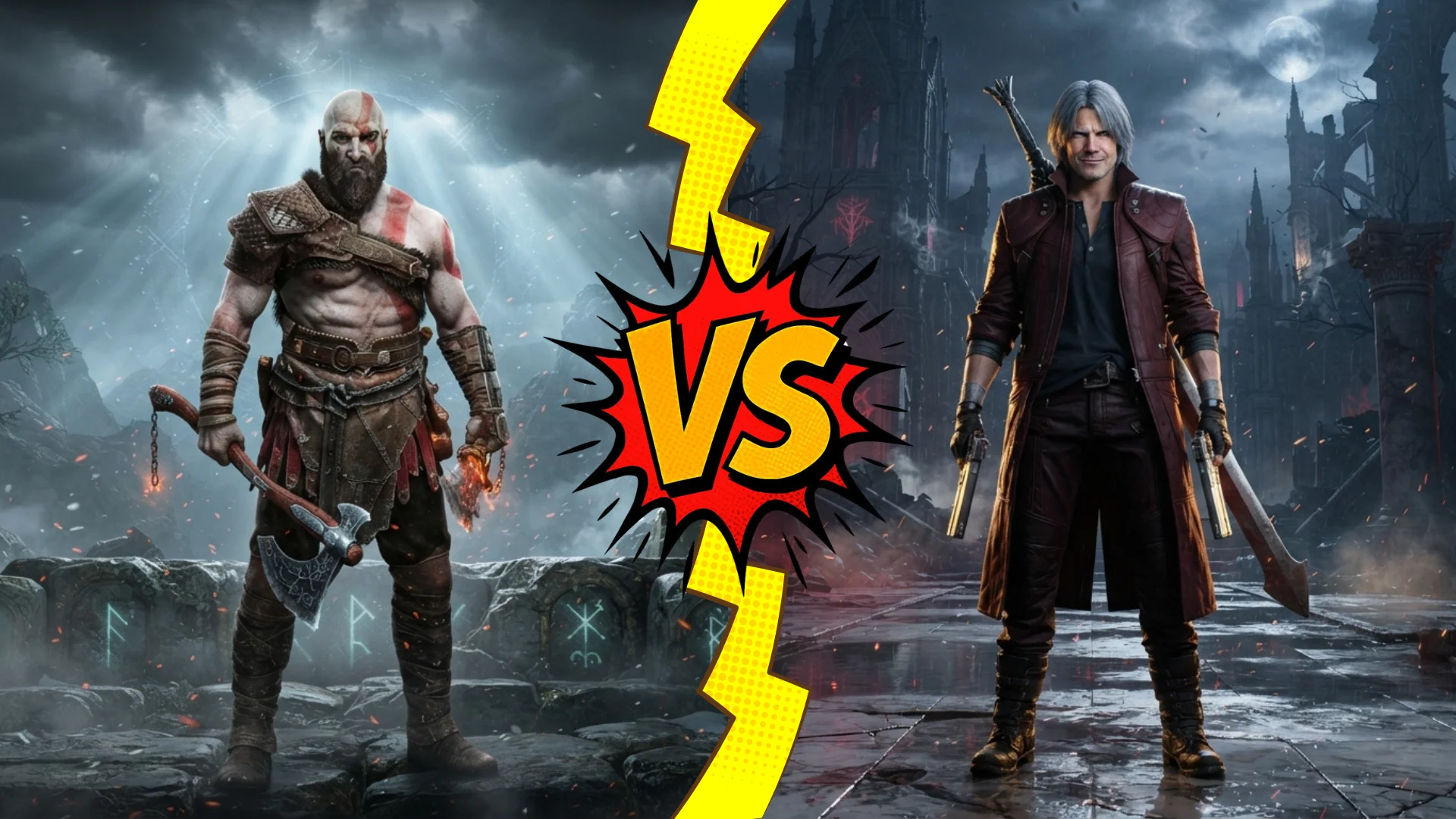
Fans have been arguing this one for over a decade, and the split usually comes down to the same question: does Kratos’s brute strength and god-killing résumé beat Dante’s superior speed, versatility, and a Devil Trigger form that keeps getting more absurd with each game. That’s where the real comparison starts getting complicated once you actually put their feats side by side.
Who Are Kratos and Dante?
Before getting into who wins, it’s worth knowing where these two actually come from, since their origins shape how differently they approach a fight.
Kratos
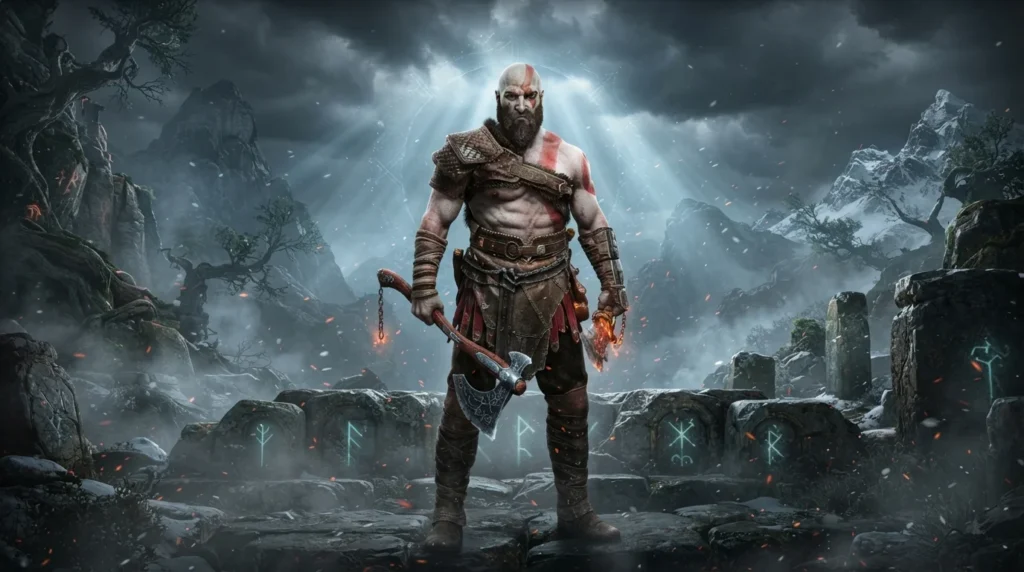
Kratos is the protagonist of Sony Santa Monica’s God of War series, introduced in 2005 as a Spartan warrior tricked by Ares, the Greek god of war, into killing his own wife and daughter. Driven by guilt and unrelenting rage, Kratos spent the Greek era of the series hunting down and killing the Olympian gods one by one, eventually striking down Zeus himself and ending Greek mythology’s ruling order entirely. Years later, the 2018 reboot and its sequel God of War Ragnarok move him into Norse mythology, where an older, more restrained Kratos is raising his son Atreus while still getting dragged into wars against Norse gods and giants. What makes Kratos compelling isn’t just the violence it’s the slow shift from a man defined purely by vengeance into someone actively trying to be a better father, without ever losing the lethal instincts that made him a god-killer in the first place.
Dante
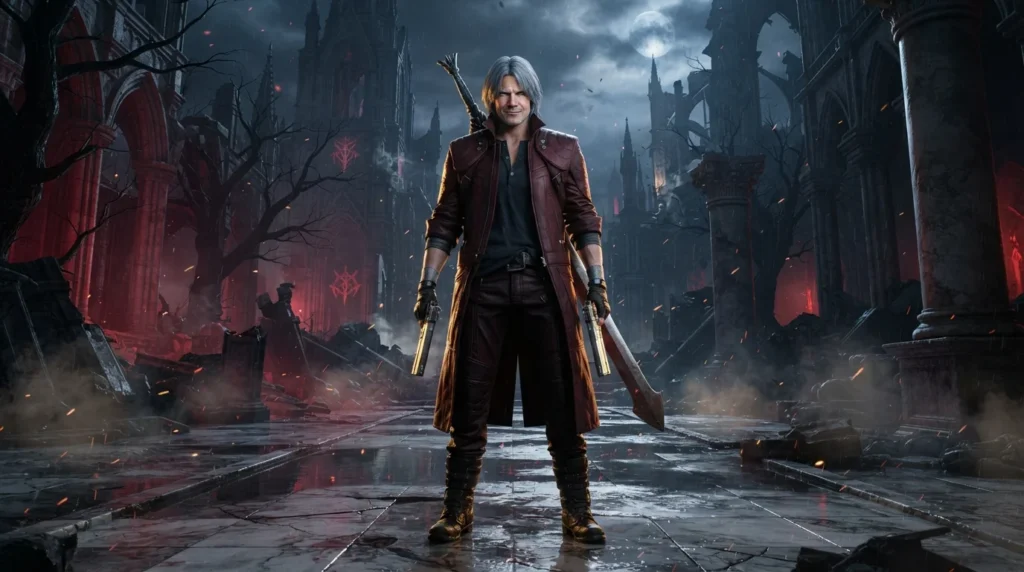
Dante is the protagonist of Capcom’s Devil May Cry series, first appearing in 2001 as a half-demon, half-human devil hunter who runs a mercenary shop called “Devil May Cry,” taking supernatural jobs mostly out of boredom and a genuine love of a good fight. He’s the son of Sparda, a legendary demon knight who once rebelled against Hell itself and sealed away the demon king Mundus, and Eva, a human woman killed alongside Dante’s twin brother’s disappearance when demons attacked their home as children. Where Kratos is grim and humorless, Dante is a wisecracking showoff who treats demon-slaying like performance art, cracking jokes mid-fight and ordering pizza between missions. His most defining moments include defeating Mundus, the demon king responsible for his mother’s death, and in Devil May Cry 5, unlocking his father’s full demonic power as the Sin Devil Trigger to defeat his brother Vergil’s corrupted form, Urizen. If Kratos fights like a man trying to outlast his enemies through sheer force, Dante fights like someone who’s already having fun and just happens to be devastatingly good at it.
For this matchup, we’re using peak Kratos (God of War Ragnarok) against peak Dante (Devil May Cry 5, including his Sin Devil Trigger form), since that’s the comparison most fans are actually arguing about.
Kratos vs Dante: Which Versions Are We Using?
This is the single biggest source of disagreement in Kratos vs Dante threads, and most arguments fall apart because people mix eras without saying so. Greek-era Kratos (God of War 1-3) is already extremely powerful, but Norse-era Kratos from Ragnarok is noticeably stronger across the board, with new elemental magic and decades more experience.
Dante has the same issue in reverse. Classic Dante from Devil May Cry 1-4 relies mostly on his standard Devil Trigger, while Devil May Cry 5’s Dante gains access to the Sin Devil Trigger a full unlock of Sparda’s demonic power that dramatically outclasses anything from earlier games. Comparing an old-game Dante to Ragnarok Kratos would heavily favor Kratos, just like comparing Greek Kratos to Sin Devil Trigger Dante would flip that same advantage the other way.
Who Has the Stronger Feats?
Kratos wins this category on raw scale nobody in the Devil May Cry series has personally wiped out an entire pantheon of gods the way Kratos did to the Greek Olympians, including killing Zeus. His resume also includes Norse-era wins against giants and gods tied to Ragnarok itself.
Dante’s feats are less about wholesale destruction and more about consistently beating opponents who are individually terrifying. He defeated Mundus, a demon king who ruled the underworld and was framed for most of the series as functionally unkillable, and later overcame Urizen, his own brother’s corrupted demonic form, using the newly unlocked Sin Devil Trigger. His feats read as “beat the specific boss that mattered” rather than Kratos’s “ended an entire mythology.”
| Category | Kratos | Dante |
|---|---|---|
| Strength | Held Atlas’s arms apart, tanked blows from Thor | Strong, but consistently portrayed as below Kratos in pure physical force |
| Signature Kill | The entire Greek pantheon, including Zeus | Mundus, demon king and his mother’s killer |
| Highest-Tier Win | Fear Zeus, Norse giants tied to Ragnarok | Urizen, using the Sin Devil Trigger |
| Weapon Range | Melee-focused, some elemental magic | Melee, firearms, multiple elemental Devil Arms |
| Fighting Style | Relentless, overwhelming force | Fast, stylish, highly versatile |
Practical tip: when comparing feats across these two, pay attention to whether a claim is about ending a threat outright (Kratos’s usual pattern) or just outlasting and out-skilling one specific powerful opponent (Dante’s usual pattern) they’re not the same kind of “win,” even when both get labeled a feat.
Weapons and Combat Style: Speed and Style vs Overwhelming Force
This is where Dante’s case gets a lot stronger. He isn’t limited to one melee kit he switches between multiple sword styles, an assortment of firearms, and several Devil Arms with completely different elemental properties, letting him adapt mid-fight in a way Kratos generally can’t.
Kratos counters with pure output: his Blades of Chaos and Leviathan Axe hit devastatingly hard, and Spartan Rage lets him tank and no-sell damage that would stagger most opponents. Where Dante wins on adaptability and speed, Kratos wins on the sheer weight behind every individual hit.
| Weapon | Special Ability | Advantage |
|---|---|---|
| Rebellion | Dante’s primary sword, gifted by his father Sparda | Versatile melee weapon with multiple combat styles built around it |
| Ebony & Ivory | Twin pistols used for constant mid-combo ranged pressure | Keeps enemies off balance without sacrificing melee flow |
| Blades of Chaos | Chained blades with fire and soul-draining properties | Excellent for relentless close-range combos |
| Leviathan Axe | Ice-elemental axe that can be recalled mid-throw | Strong ranged option and a signature “gotcha” attack |
Speed and Durability: Who Reacts Faster and Tanks More?
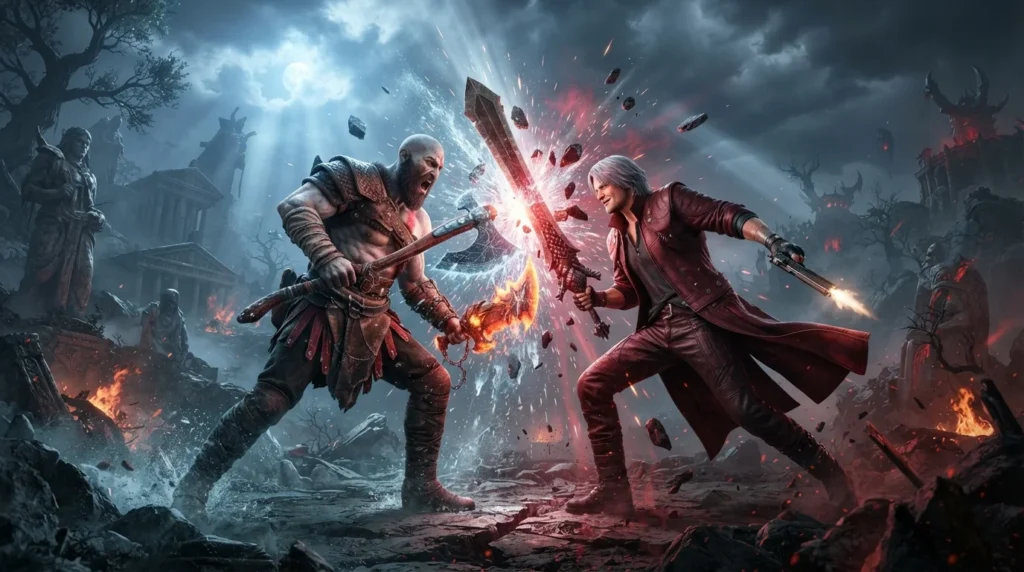
Dante is widely considered faster than Kratos, especially once his Devil Trigger is active his entire combat style in Devil May Cry 5 is built around rapid style-switching, dodging, and closing distance almost instantly. Community power-scaling threads on VS Battles Wiki forums consistently note Dante as more agile and reactive in a straight speed comparison.
Durability tilts back toward Kratos. He’s tanked hits from Thor and survived volcanic-level destruction without lasting harm, and his overall pain tolerance and endurance across the series are usually rated above Dante’s, even accounting for Dante’s own resilience and regeneration.
Practical tip: a lot of Dante-favoring speed arguments lean on Devil Trigger feats specifically, so make sure you’re comparing Devil Trigger Dante to Spartan Rage Kratos, not base-form Dante to an enraged Kratos matching power-up states matters as much as matching game versions.
Battle IQ and Combat Instincts
Kratos generally gets the edge here, mostly from sheer accumulated experience centuries of war and one-on-one fights against gods have made him methodical and hard to catch off guard, even against faster or trickier opponents.
Dante’s battle IQ shows up differently: he reads openings fast and adapts his weapon and fighting style on the fly mid-combo, which works brilliantly against varied enemy types but is a different skill than Kratos’s more grinding, attrition-based approach. Neither is unintelligent in a fight they just solve problems in opposite ways.
How to Compare These Characters Accurately
This matchup runs into a common cross-franchise problem: Kratos’s power is expressed in mythological terms gods, pantheons, primordial beings while Dante’s power is expressed through demon hierarchy and personal skill progression, which don’t map onto each other cleanly. A “demon king” and a “primordial god” aren’t automatically equivalent just because both sound cosmic.
Fan power-scaling communities are also split on how literally to take some of Dante’s more extreme Devil May Cry 5 feats versus Kratos’s more directly shown, in-combat god kills. When you see a confident “Dante solos” or “Kratos stomps” claim online, check whether it’s built on a feat both sides actually witnessed in-game, or on background lore and dialogue that’s easier to inflate.
Popular Abilities, Forms, or Weapons
Kratos’s most iconic power-up is Spartan Rage, a berserker state that massively boosts his strength and lets him no-sell attacks that would otherwise stagger him the move most fans picture first when Kratos “gets serious.”
Dante’s defining form is the Sin Devil Trigger, introduced in Devil May Cry 5 as the full unlock of his father Sparda’s demonic power, dramatically boosting his strength, speed, and move set beyond his standard Devil Trigger. His other signature tool is Rebellion combined with Ebony & Ivory, the weapon combo most associated with his fighting style across the entire series.
Read: Kratos vs Doom Slayer
Read: Thor vs Doctor Doom
Read: Goku vs Naruto
Read: Ghost Rider PFP
Read: Yujiro Hanma PFP
Frequently Asked Questions
Conclusion
Kratos vs Dante comes down to overwhelming force against speed and versatility, and it’s genuinely one of the more contested matchups in gaming crossover debates. Kratos’s brute strength and durability likely edge this out, but Dante’s speed, weapon variety, and Sin Devil Trigger keep it closer than a lot of one-sided “who would win” arguments suggest. Where do you land on this one?

One Comment