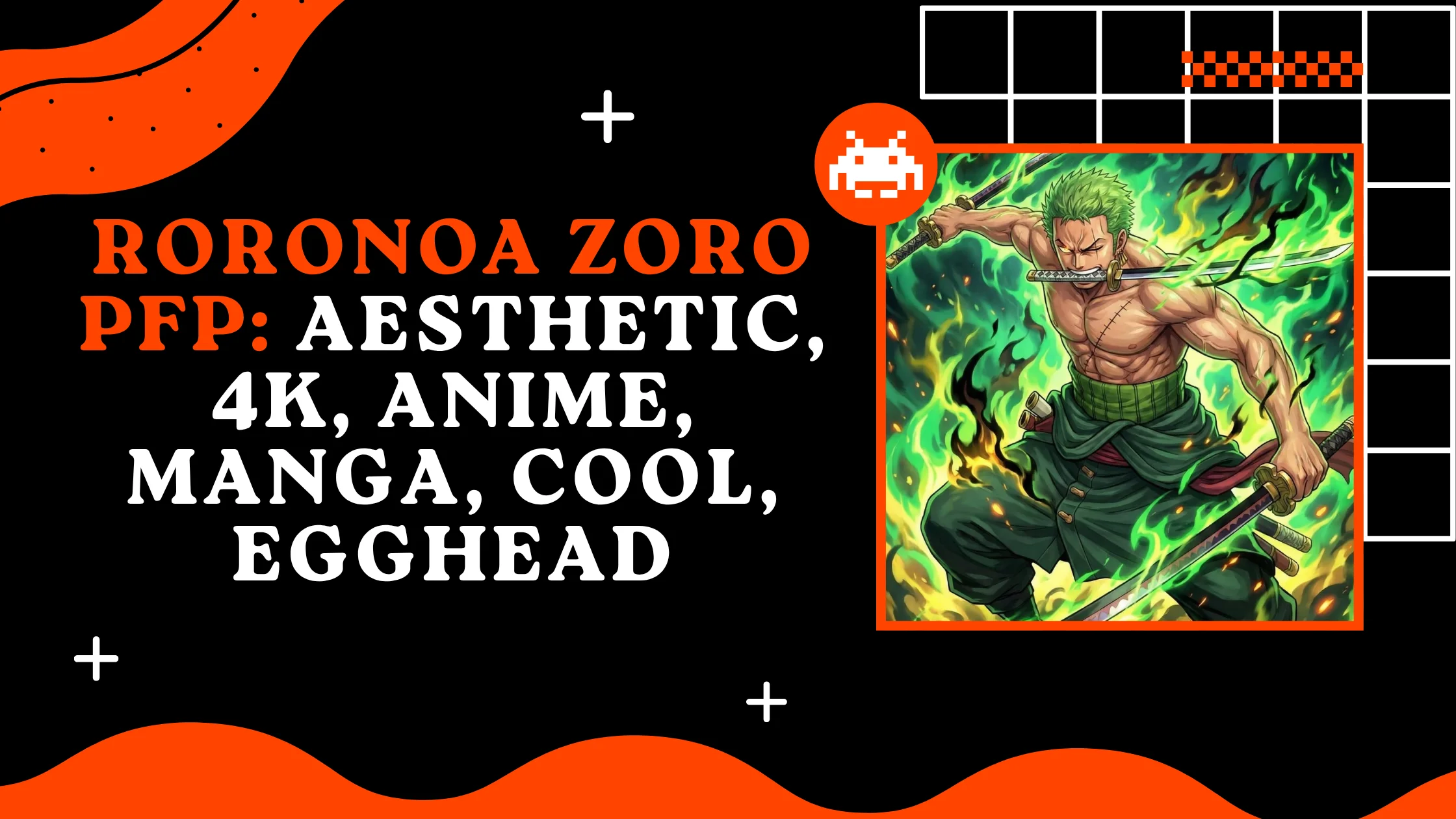
420+ Roronoa Zoro PFP: Aesthetic, 4k, Anime, Manga, Cool, Egghead
A Roronoa Zoro PFP works as a profile picture the same way Zoro works as a character: it doesn’t need to explain itself. Since Eiichiro Oda introduced him in the third chapter of One Piece back in August 1997, Zoro has built a visual identity three swords, one bandana, a permanently closed left eye distinctive enough that a single cropped panel or frame reads as unmistakably him, even to people who’ve never picked up the manga.
That instant recognizability is exactly why Zoro performs so well as a PFP subject specifically. Few anime characters have accumulated as many genuinely different, individually iconic looks across one continuous storyline from his scrappy East Blue debut through the six-armed demon aura of Ashura to the blood-soaked King of Hell power-up that let him wound a Yonko-tier opponent in Wano. With One Piece’s anime now airing the long-awaited Elbaph Arc as of April 2026 and Netflix’s live-action adaptation delivering its second season that same month, there’s more fresh Zoro material circulating right now than most existing PFP roundups have caught up to.
Roronoa Zoro Aesthetic PFP
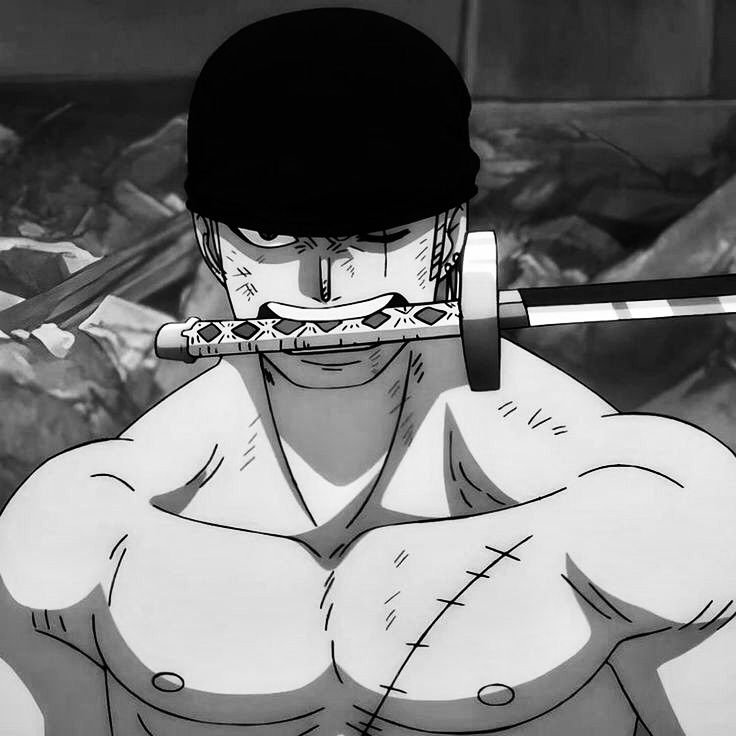
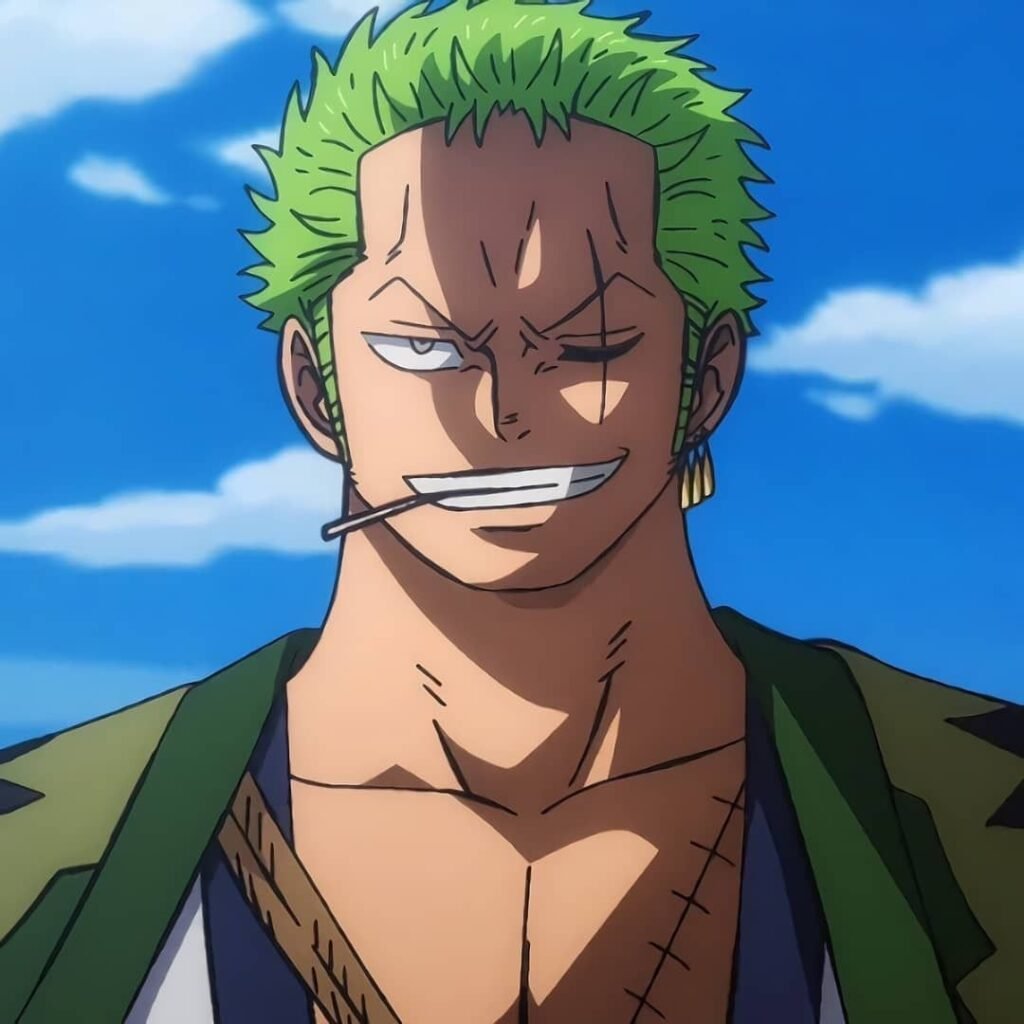
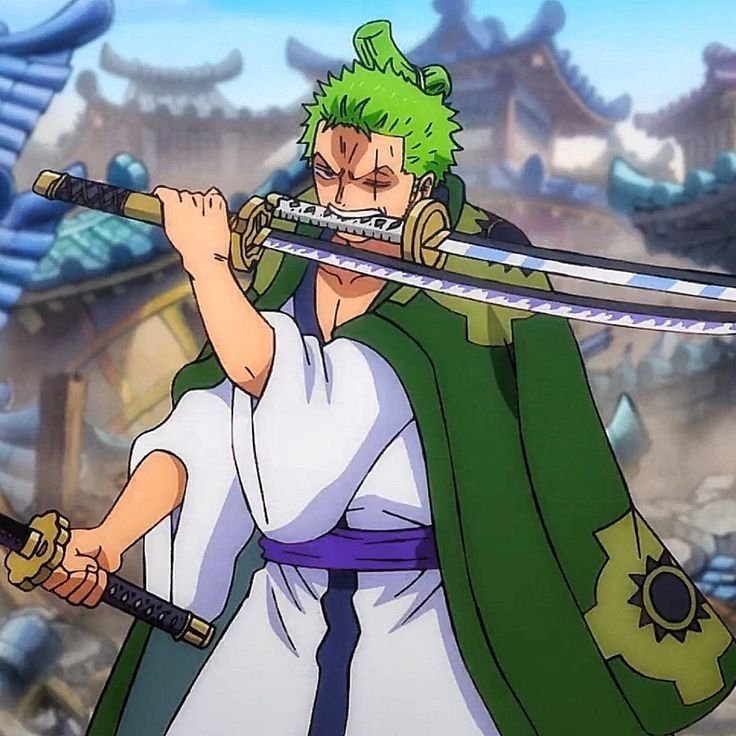
An aesthetic Zoro PFP leans away from combat entirely, favoring quiet, atmospheric moments Zoro asleep against a mast, meditating before a fight, or standing alone in low light with his swords sheathed. Muted, desaturated color grading pulls his green hair toward a duller sage tone and softens his black haramaki and white shirt into warmer grays, echoing the moody, contemplative fan-art tradition built specifically around his more introspective panels rather than his fight scenes.
Lighting does most of the emotional work here: a single light source — moonlight, a lantern, dawn breaking over open water — casts long shadows across his face and draws attention to the closed left eye without needing a dramatic wound reveal. Backgrounds favor open ocean horizons, ship decks at rest, or dojo interiors rather than the chaotic battlefields that dominate his more action-oriented fan art.
The emotional tone connects directly to a specific, well-known character trait: Zoro’s quiet, near-wordless loyalty, most famously expressed in his refusal to explain his injuries after taking on Luffy’s damage against Mr. 3, insisting nothing happened at all. That stoic restraint, rather than his swordsmanship, is the actual subject of this style, which is why it resonates with fans who connect to his character over his combat scenes.
Cool Roronoa Zoro PFP
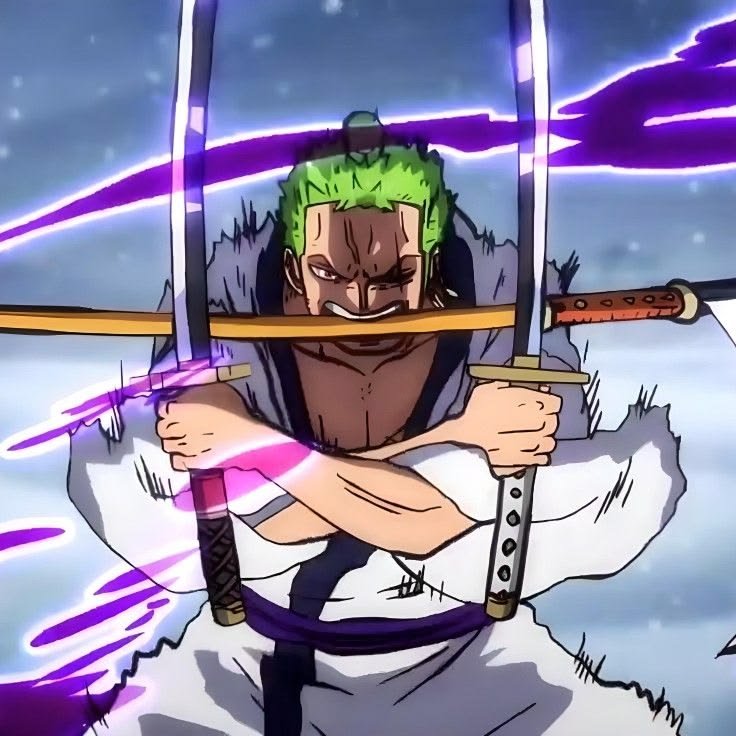
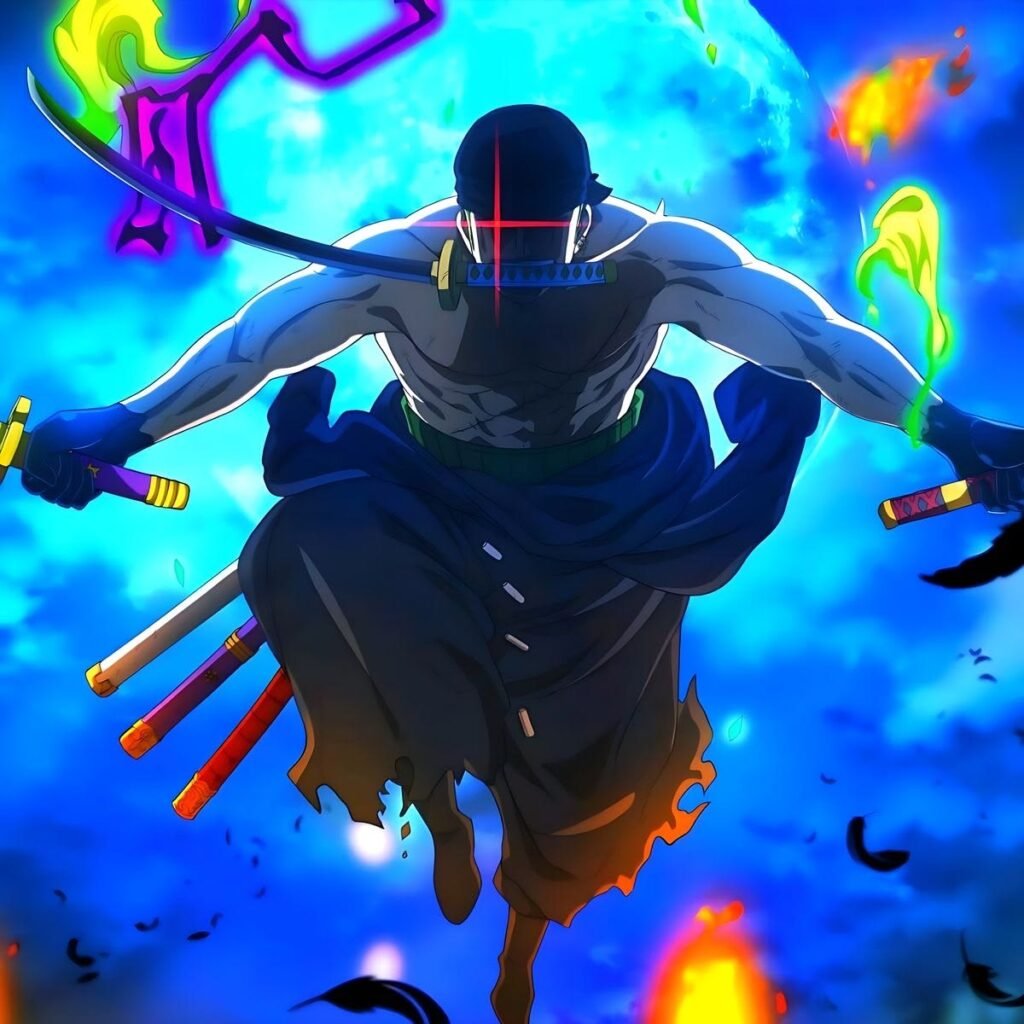
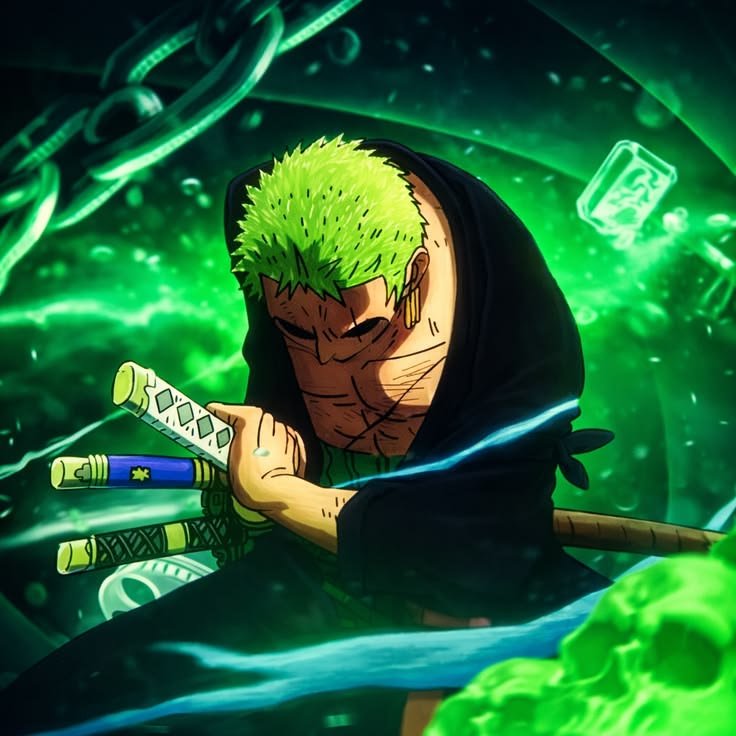
The “cool” category is where Zoro’s default fan-art energy already lives, and for good reason: three swords held simultaneously, one gripped in his teeth, is a genuinely unique visual signature no other major anime swordsman shares in quite the same way. High-contrast crops centered on this exact pose Santoryu, his original three-sword stance dominate this style, usually paired with a sharp, determined half-smile rather than an open battle cry.
Color palette stays close to his signature green hair and black-and-white outfit, but cool-style edits typically punch up contrast and add cinematic color grading teal shadows, warm highlights rather than the muted tones used in the aesthetic category above. Motion blur or speed lines trailing off his blades are a common addition, referencing the split-second sword draws that define his actual fighting style in both the manga and anime.
This is also the category most likely to reference a specific canon moment directly: Zoro’s fight against Mihawk in the East Blue Saga, where he took a fatal-looking chest wound rather than turn his back on an opponent, remains one of the most consistently redrawn scenes in the entire fandom specifically because it established his core motivation becoming the world’s greatest swordsman in a single image.
“Fans of Zoro’s rivalry and style may also like our Sanji PFP collection.”
Cute Roronoa Zoro PFP
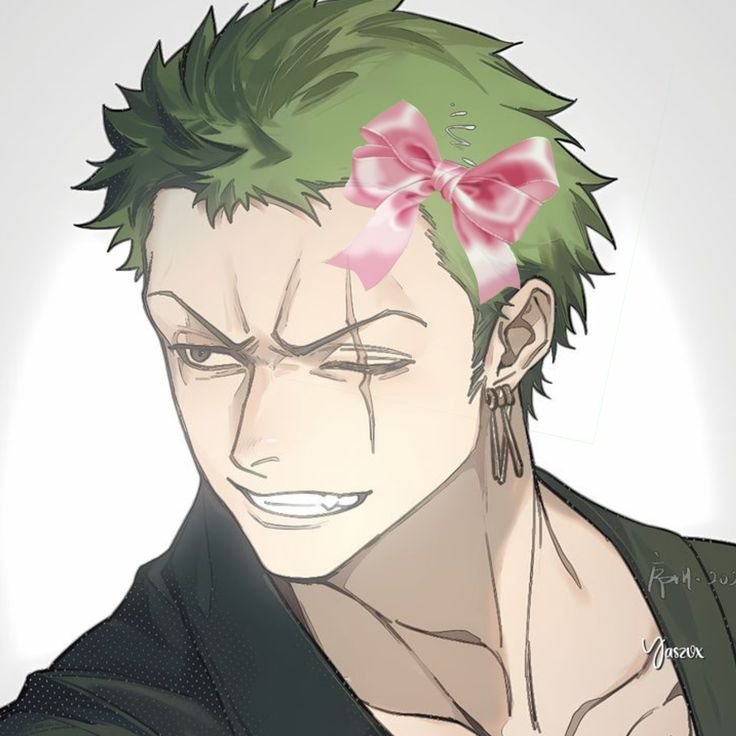
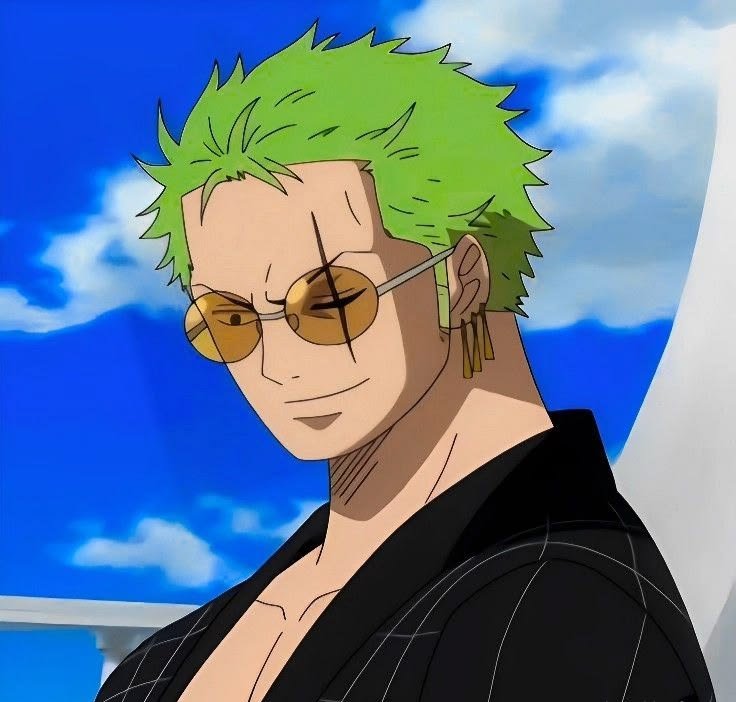
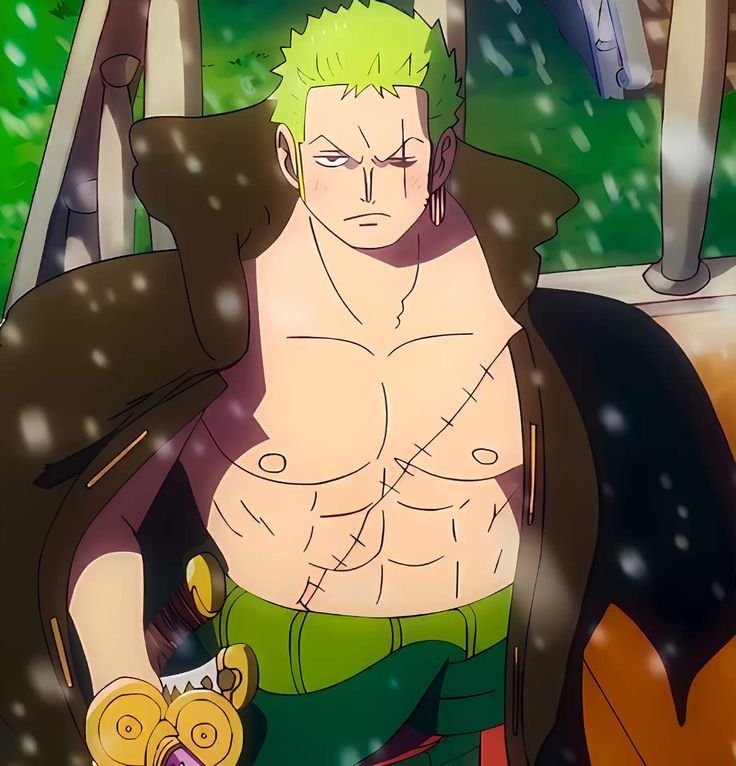
A dedicated chibi and cute-style Zoro tradition exists specifically because of the gap between his intimidating reputation and his actual comedic role in the story his infamously, almost supernaturally poor sense of direction, a running gag so consistent that fans and even other characters in-universe treat it as a genuine character flaw rather than a joke. Cute-style Zoro art frequently references this directly: a lost, confused expression, wandering panels, or a tiny compass that’s clearly pointing the wrong way.
Visually, chibi treatments shrink his proportions into a rounder, softer shape while keeping the three-sword silhouette and green hair intact, often paired with simplified, dot-style closed eyes rather than his usual sharp, narrow gaze. Backgrounds trend toward flat pastel colors or simple ship-deck patterns rather than any detailed scene, keeping the focus entirely on the exaggerated expression.
This style works particularly well for fans who connect with Zoro’s goofier side the running-gag chaos of him somehow ending up nowhere near where the crew told him to go rather than his swordsman intensity, and it offers a genuinely different entry point into the character than the cool, combat-focused edits that dominate most Zoro PFP searches.
Roronoa Zoro Discord PFP
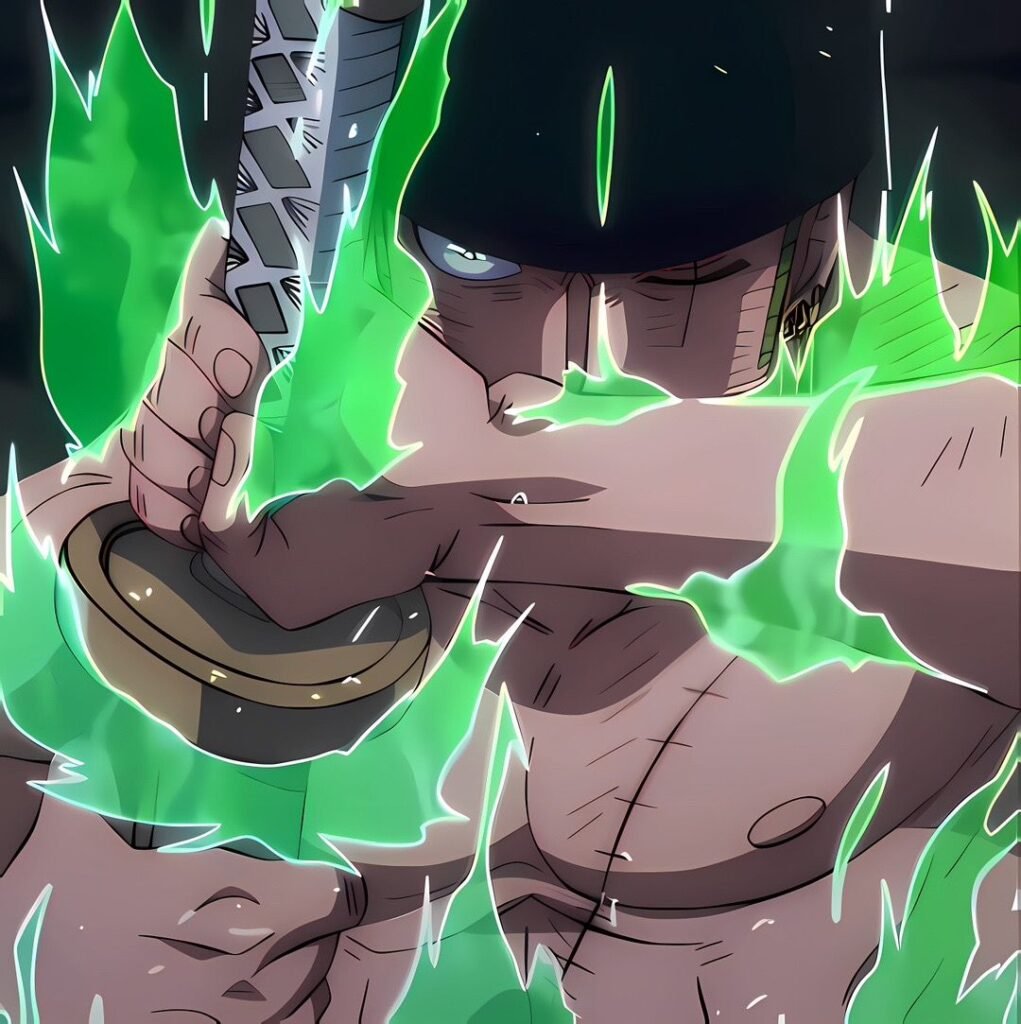
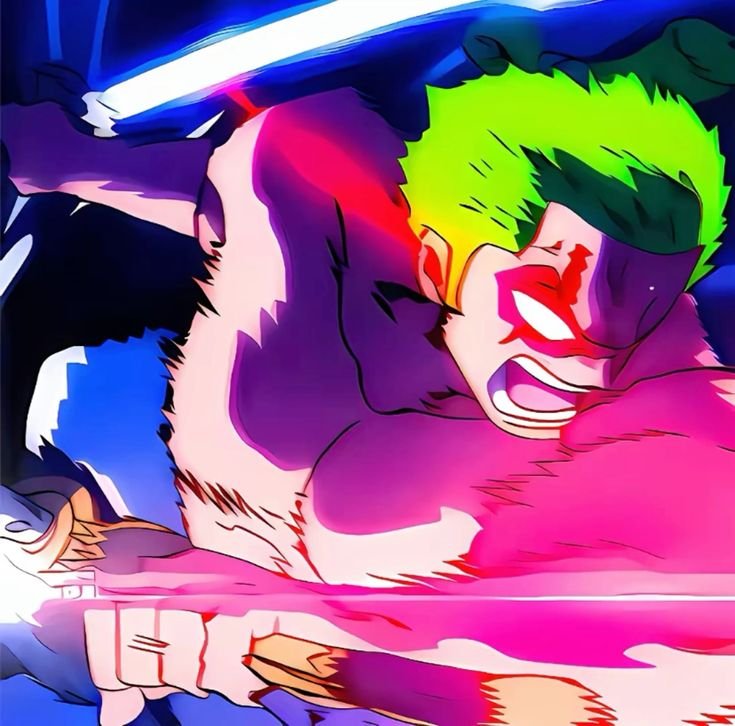
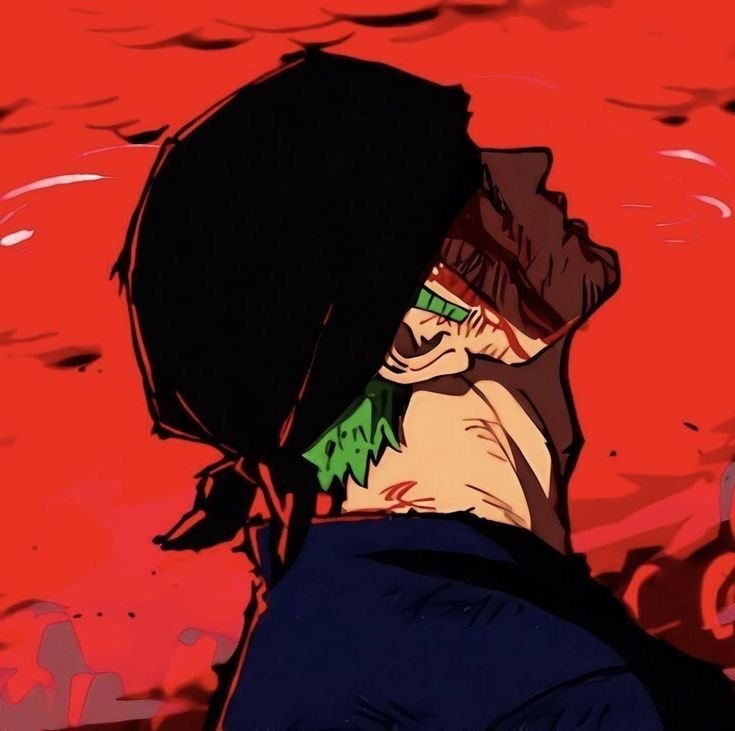
Discord’s small circular avatar sits directly beside a colored status dot and role-colored username, and Zoro’s design holds up well here mainly because of his hair: the bright, solid green reads clearly against nearly any status color or banner scheme without clashing, an advantage over characters with busier or more muted palettes. A tight crop centered on his face ideally including at least a hint of the bandana or headband keeps him recognizable even at Discord’s smallest display sizes.
Server banner pairing benefits from Zoro’s consistent black-and-green color story, since it’s easy to build a coordinated banner from ship-deck or dojo scenery in the same tones without needing a custom edit. Community fit is especially strong in One Piece-specific Discords, where Zoro’s fandom splits fairly evenly between fans who favor his combat-focused fan art and those drawn to his comedic running gags meaning both the cool and cute styles covered above see regular use in exactly this kind of server.
His three earrings and the small scar detailing on his face also read clearly at Discord’s compressed resolution, which matters more than it sounds like it should these details are what separate a recognizable Zoro crop from a generic green-haired anime character silhouette.
Roronoa Zoro Pinterest PFP
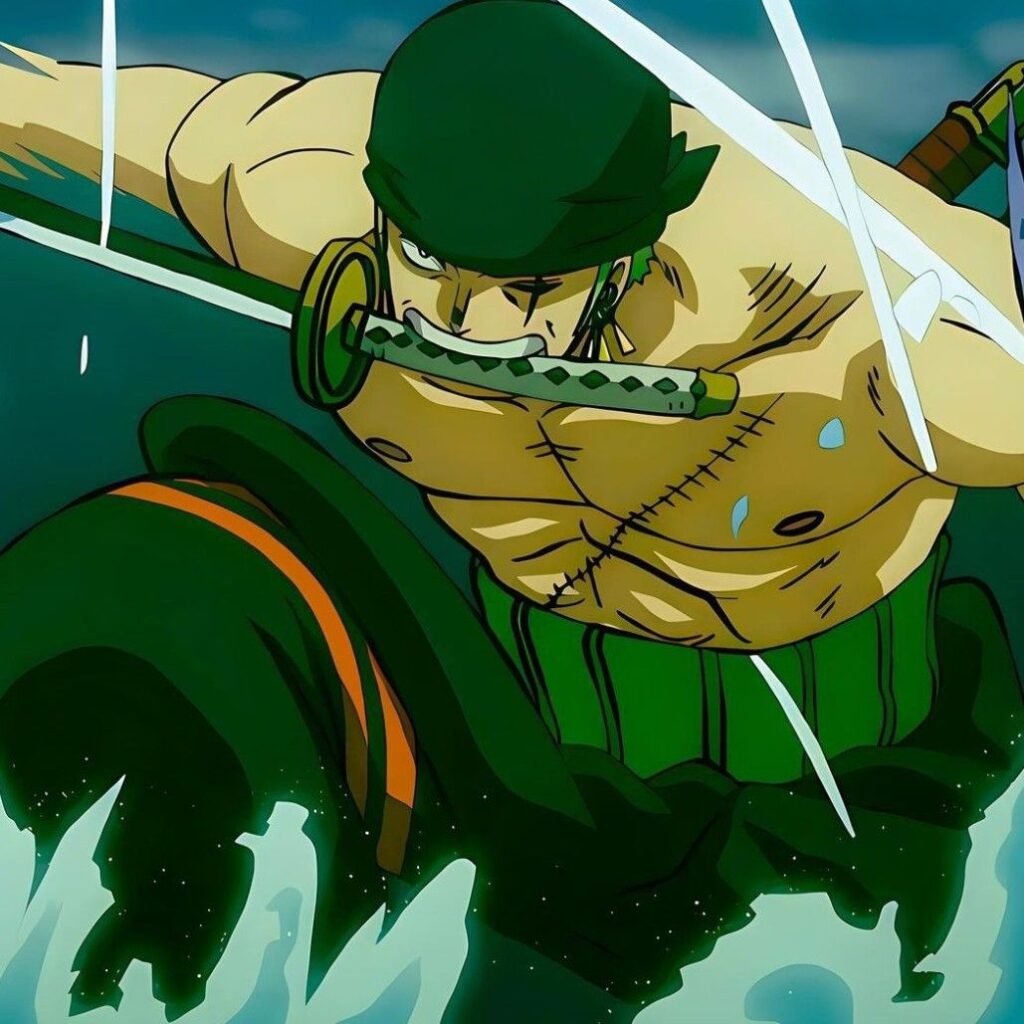
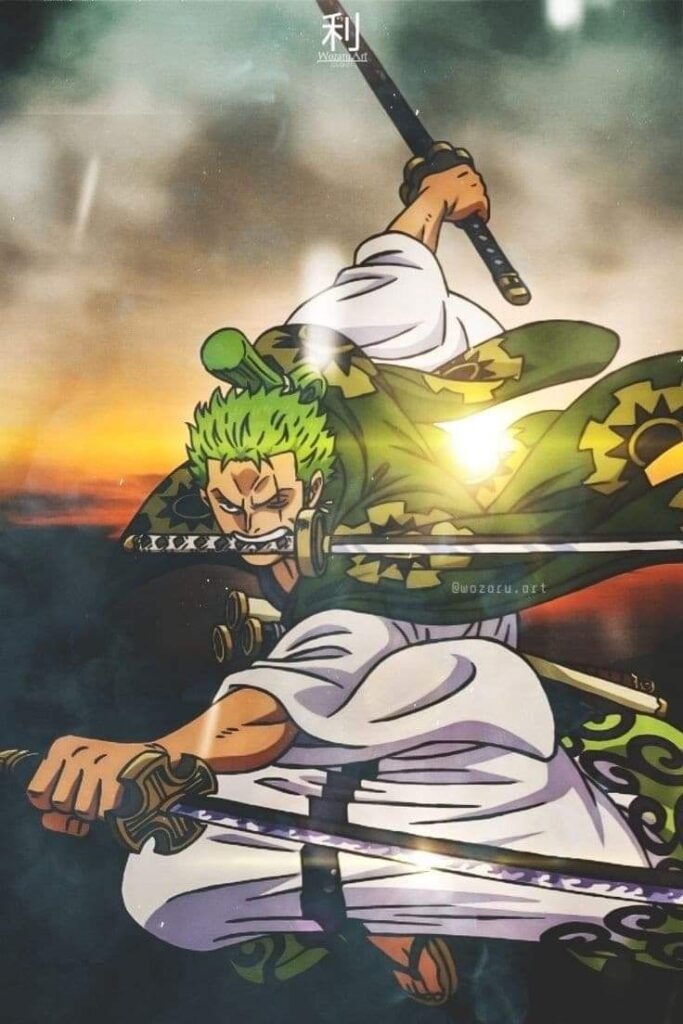
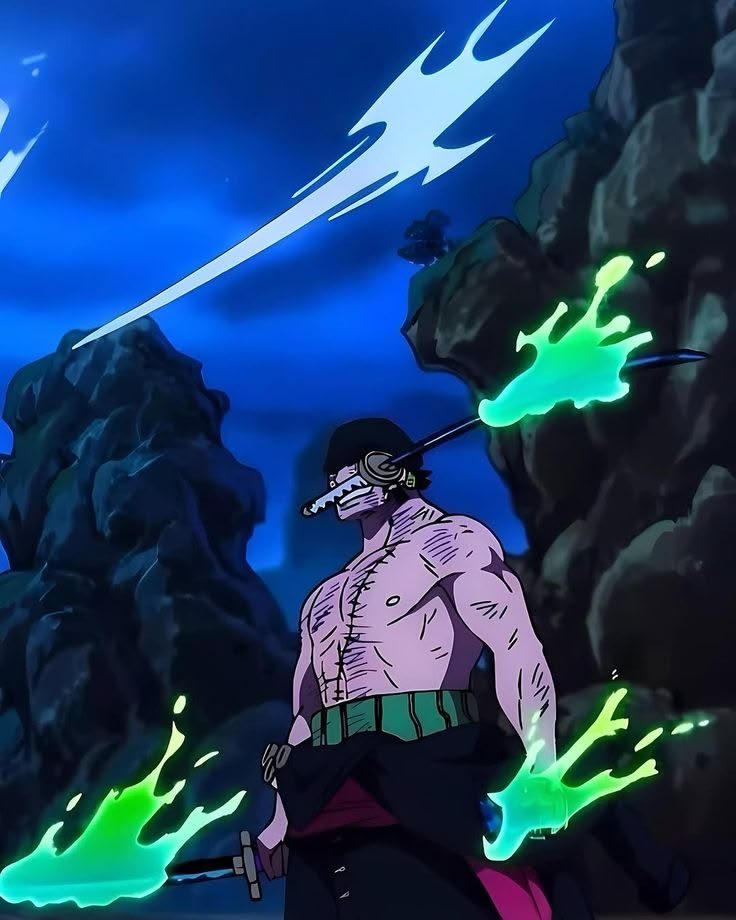
Pinterest’s board-based discovery rewards full-scene, non-cropped images over tight avatar squares, and Zoro benefits specifically from the platform’s active manga-colorization community fan colorists who take Oda’s original black-and-white panels and render them in full color, a specific and popular subgenre distinct from either official anime frames or original fan art. Dedicated boards built around “Zoro manga color” searches pull consistent, sustained traffic independent of any single source post.
Because Pinterest images get re-pinned and cropped by the person saving them, high-resolution stills with room around the character a full fight panel rather than a face-only crop tend to spread further than pre-cropped squares. Zoro’s fight scenes are a genuine advantage here, since panels from his major battles (Mihawk, Kaku, King, Kaido) already function as complete, dramatically composed pieces of art in their own right, without needing additional editing to work as a wallpaper-style pin.
Search behavior also skews toward specific technique and moment names rather than generic character searches “Zoro Ashura” and “Zoro King of Hell” both pull dedicated results distinct from a general “Zoro pfp” search, which is a pattern this guide’s named-variant sections below are built to match directly.
Roronoa Zoro Instagram PFP
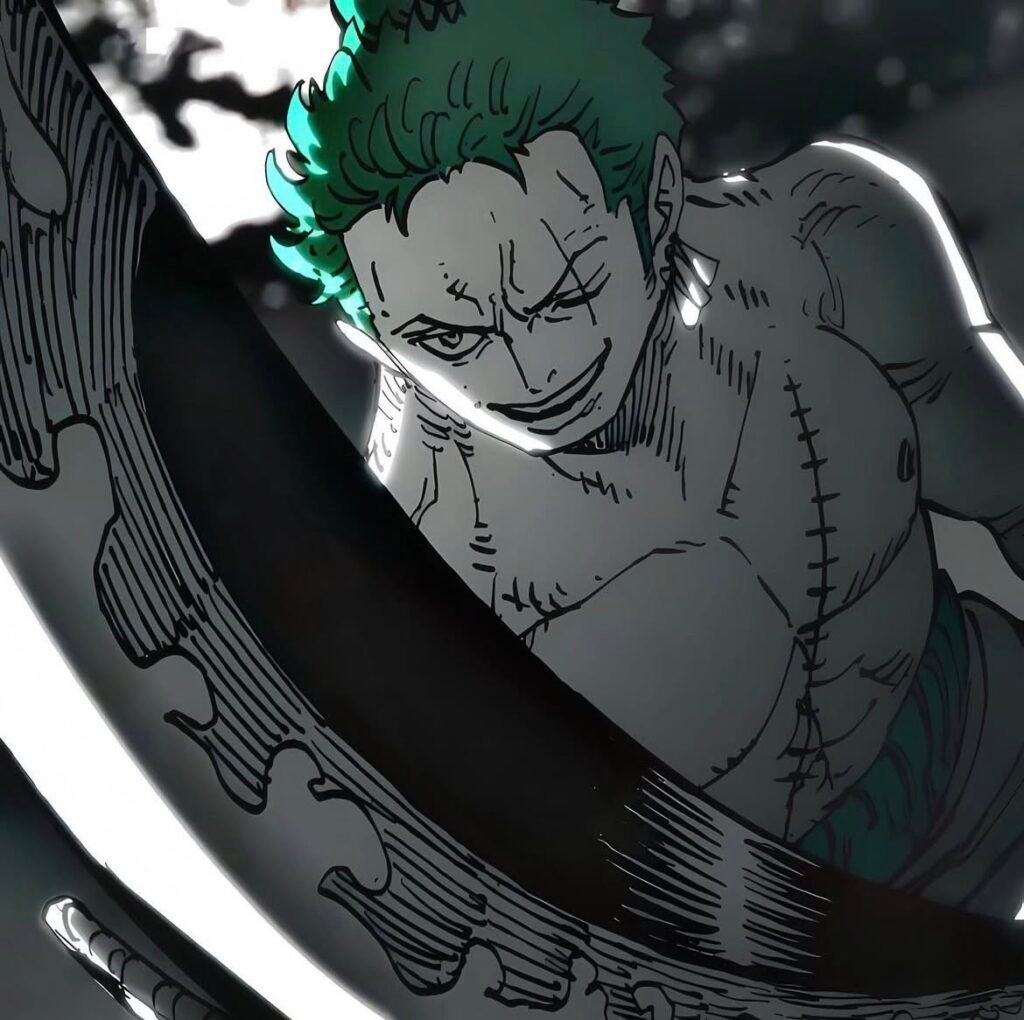
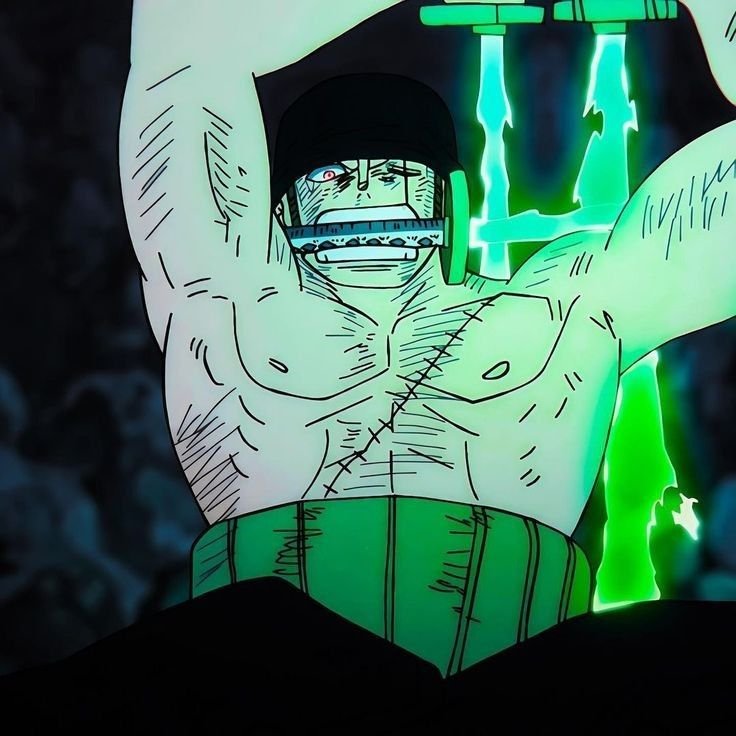
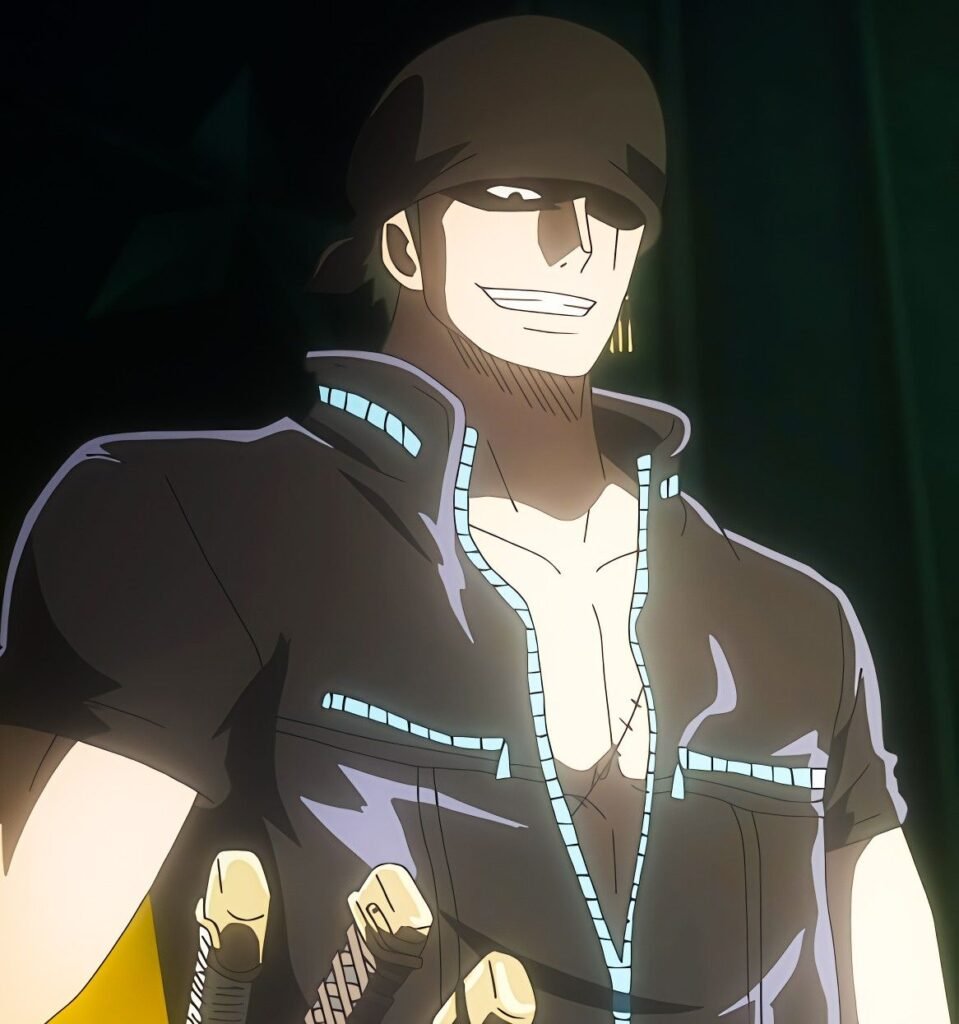
Instagram’s circular crop sits against the app’s rainbow-gradient story ring, and Zoro’s black-and-white outfit with green hair generally holds up well against it, since the high contrast between his dark clothing and lighter skin tone keeps him legible regardless of which color segment of the ring happens to be active. A centered face crop that includes his bandana, when he’s wearing it, adds a recognizable silhouette element that survives the circular cut better than a full-body pose would.
Because the avatar reappears small and often across comments and likes, simple, high-contrast crops outperform detailed multi-character scenes here specifically. Grid and feed coordination matters for accounts running a consistent visual theme: fans posting manga-colorization content tend to match their avatar to that same colorized style, while accounts focused on the anime or live-action adaptation favor stills sourced from those specific media instead.
Community-wise, Zoro performs especially well among accounts built around One Piece theory content and sword-style breakdowns specifically, where his technical, named fighting styles (Santoryu, Ashura, King of Hell) give posters recurring, specific content to build a themed feed around.
Roronoa Zoro HD/4K PFP
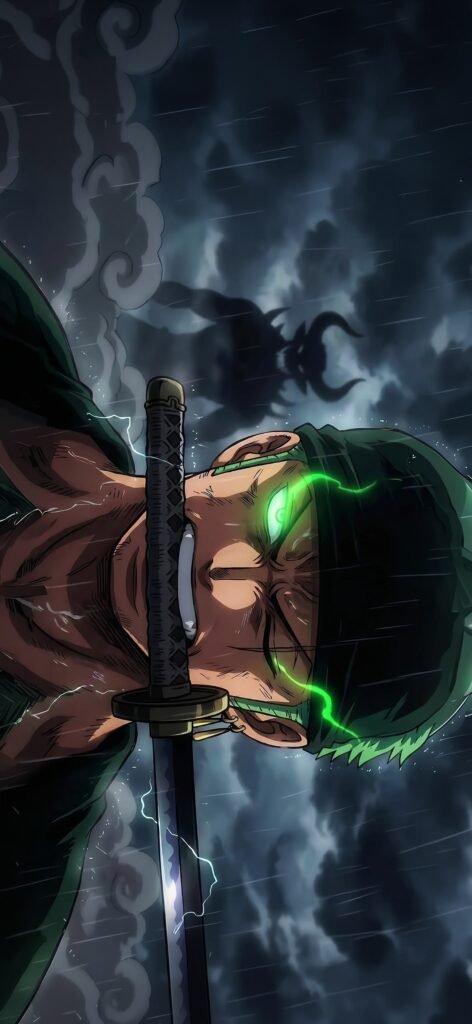
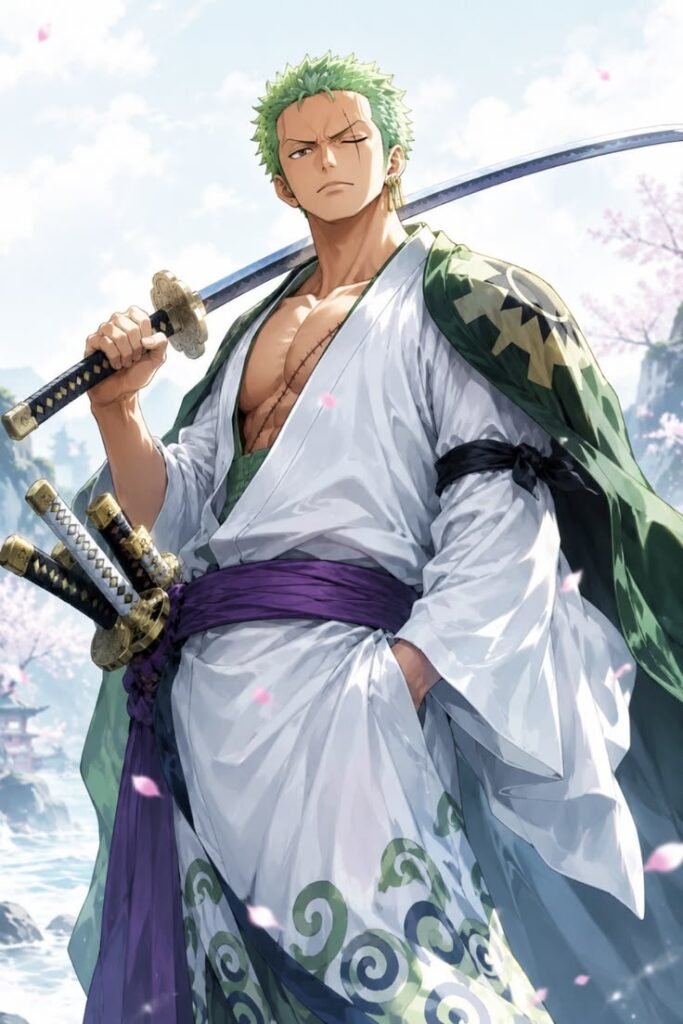
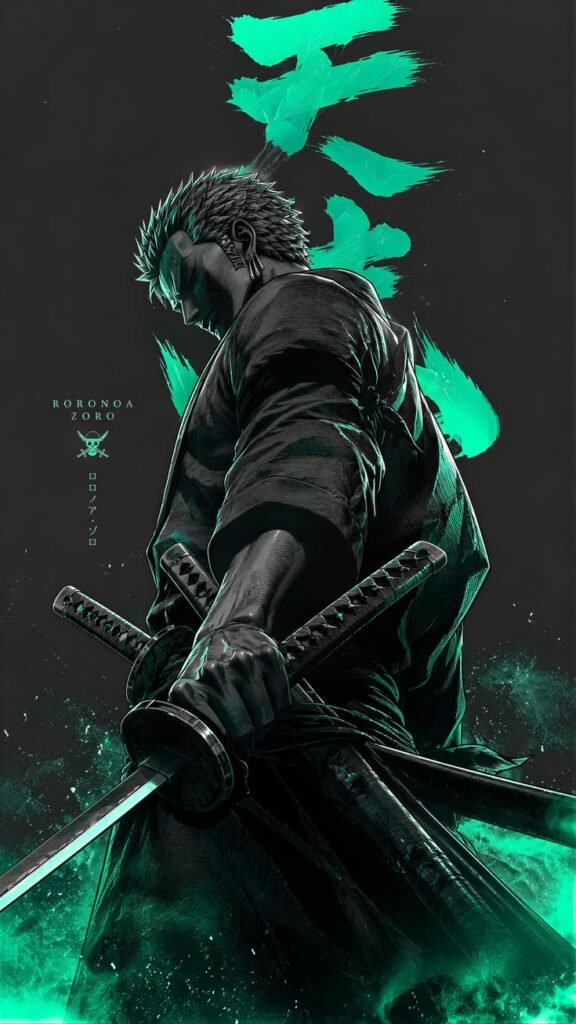
High-resolution Zoro material has become significantly more available since the Wano Country Arc, which Toei Animation rendered with noticeably higher production values than earlier seasons, particularly during Zoro’s fight against King, where his King of Hell Three Sword Style debut received some of the most detailed animation in the entire series. These frames currently offer sharper, more detail-rich source material than most recirculated screenshots from the show’s earlier East Blue or Alabasta-era episodes.
Fine detail matters specifically because of Zoro’s design elements: the texture of his haramaki, the individual strands of his hair, and the metallic sheen on his three swords all read as either crisp or muddy depending on source resolution, and upscaling an older, lower-resolution screenshot tends to smear exactly that detail rather than restore it.
For anyone chasing genuine 4K quality right now, stills from the anime’s current Elbaph Arc which began airing April 5, 2026, under Toei’s new higher-quality seasonal production schedule represent the freshest, technically sharpest source material available, ahead of most recirculated older frames that dominate existing wallpaper sites.
“For another hard-hitting anime figure, see our Yujiro Hanma PFP collection.”
Roronoa Zoro Wallpaper PFP
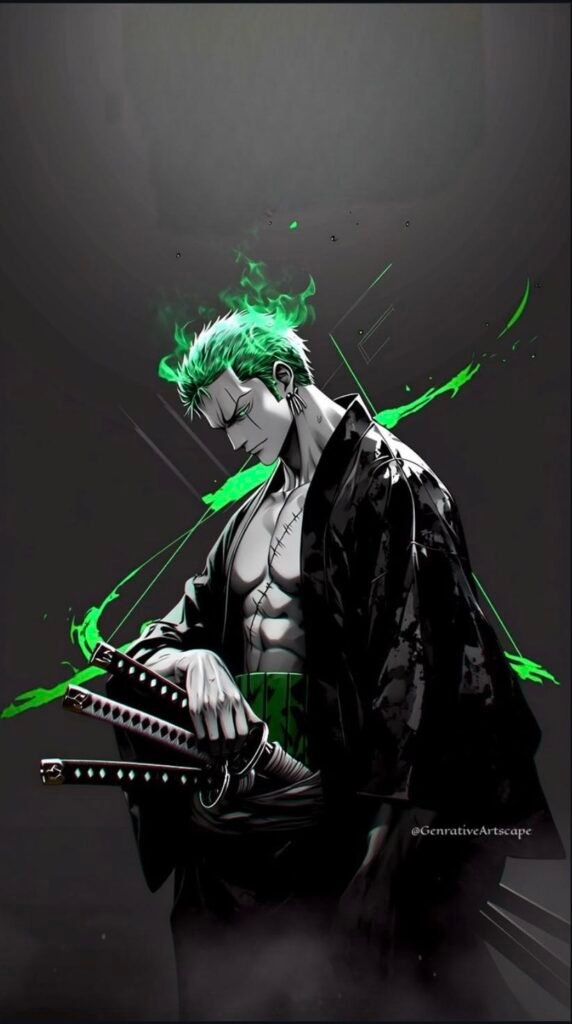
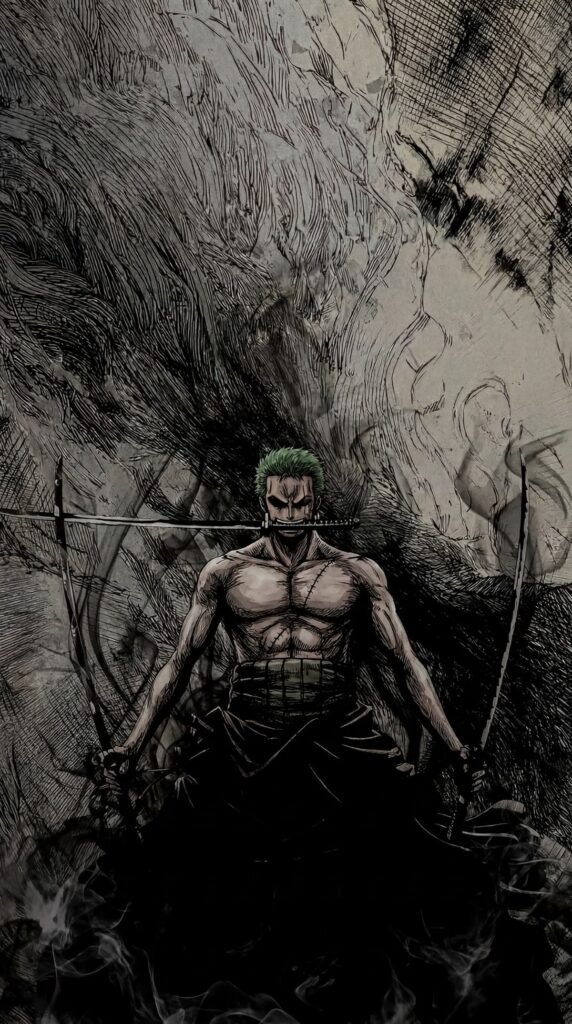
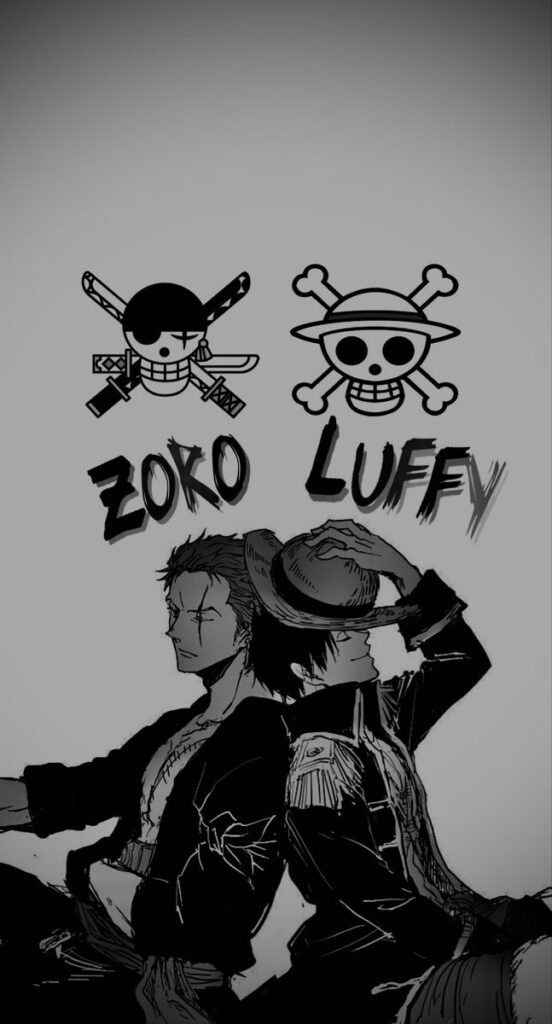
Wallpaper-style Zoro images differ from PFP crops mainly in scope: instead of an isolated face-and-shoulders shot built to survive a circular frame, wallpaper compositions typically show a full fight pose, multiple swords in frame, and a detailed environmental backdrop Onigashima’s rooftop, a rain-soaked dojo, the open sea at dawn rather than a tight, isolated crop.
Because wallpapers are viewed at full size, details that get lost in an avatar crop become the actual selling point: the full spread of his three-sword stance, Enma’s distinctive black blade catching light differently than his other two swords, or a wide shot capturing the six-armed Ashura silhouette looming behind him, an image that only reads correctly at a larger scale.
Fan-site traffic data consistently shows Zoro among the most-downloaded One Piece characters for both 4K wallpapers and general PFP use, with the highest-traffic pieces favoring dramatic action poses and dark, moody color grading over the lighter, more comedic material — a pattern that holds for wallpaper use even though those same comedic images perform well specifically in the cute-PFP category covered earlier.
Classic Three Sword Style Zoro PFP
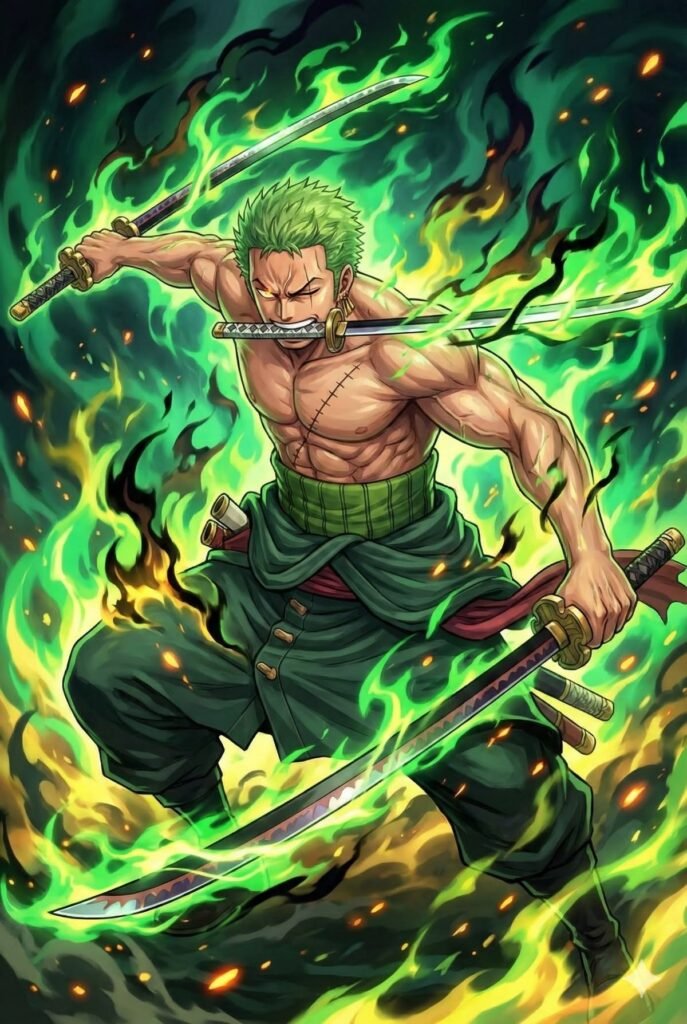
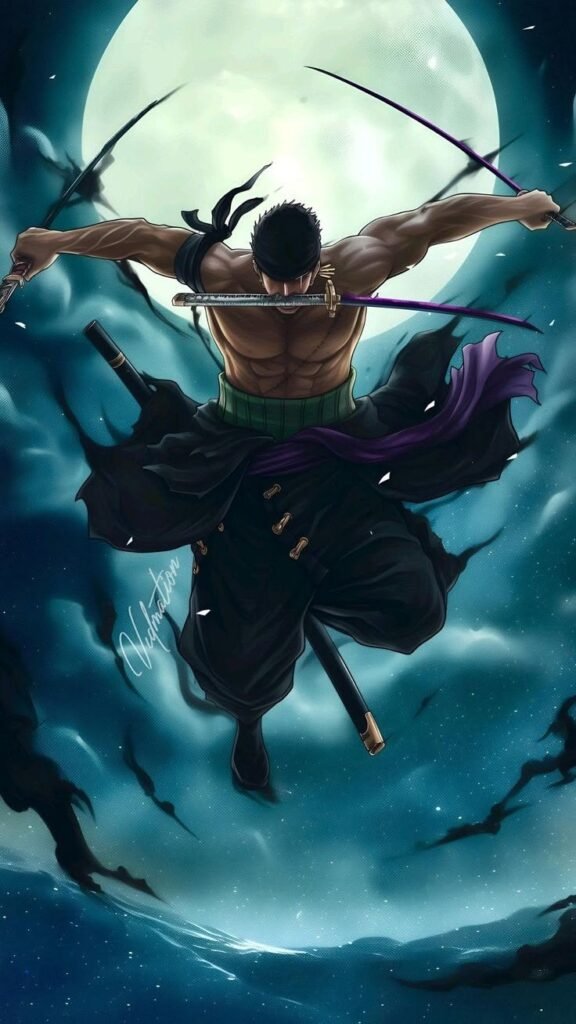
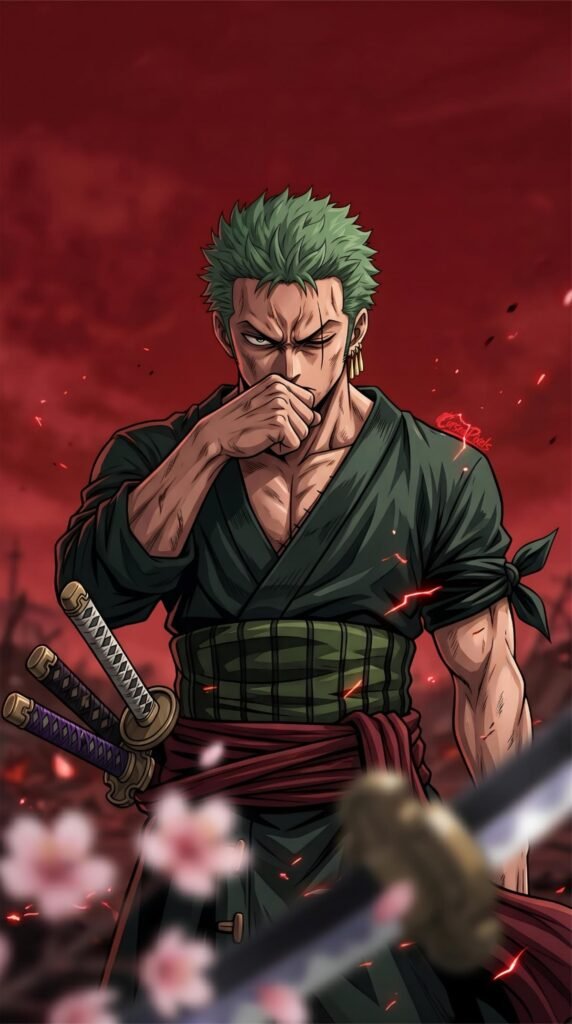
This is Zoro’s baseline design: green hair, three swords worn at the hip and drawn simultaneously into his mouth and both hands, a black haramaki sash, and depending on the arc a white bandana tied around his head, which he reserves specifically for moments when he’s about to fight seriously rather than wearing at all times. That detail alone makes the bandana version of this look a specific, deliberate PFP choice rather than a generic default, since longtime readers recognize it as a signal that Zoro is done holding back.
His original fighting style, Santoryu (Three Sword Style), remains unique to him among major One Piece characters, and it’s the visual foundation every later power-up below builds from rather than replaces. The style itself came from a specific, small but real detail in the manga’s early concept work: Zoro originally used only two swords before Oda settled on three, and the resulting silhouette one blade gripped in the teeth — has since become inseparable from the character’s identity.
For PFP purposes, this is the safest and most universally recognizable Zoro option, holding up cleanly at any crop size without requiring viewers to know a specific arc or power-up to place the character correctly.
Ashura Zoro PFP
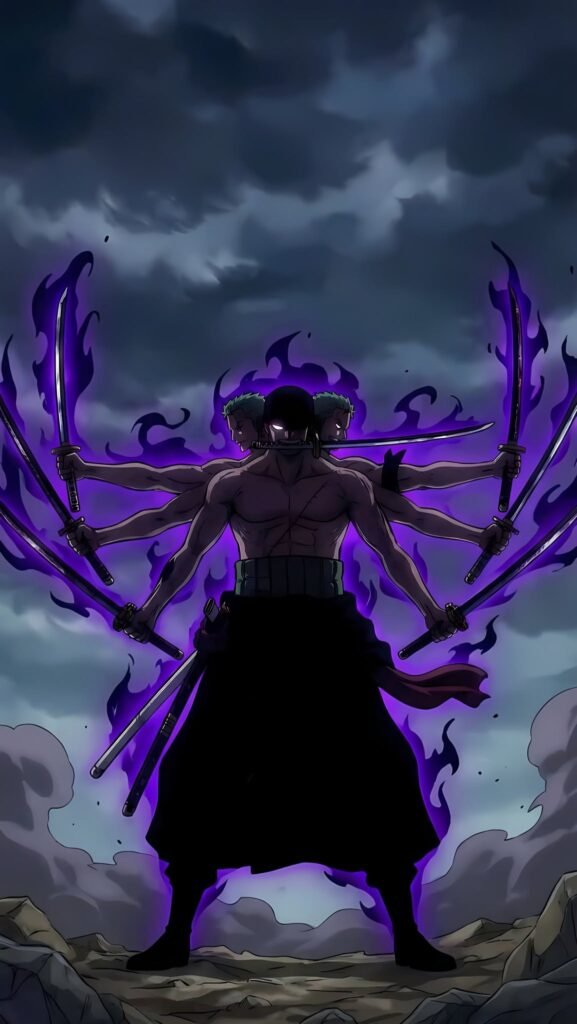
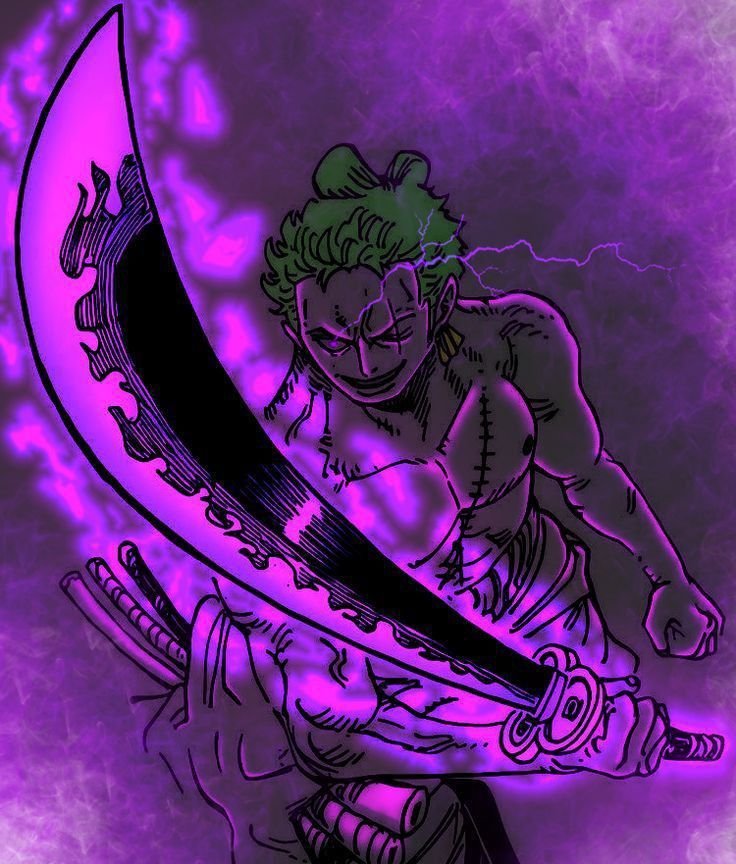
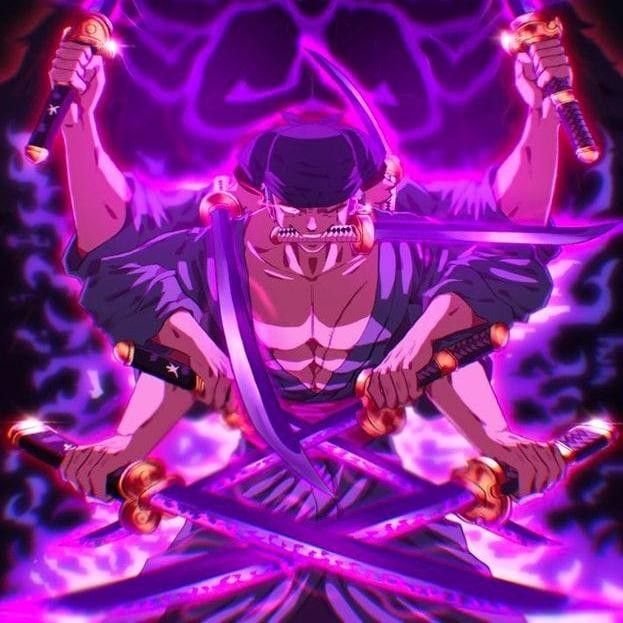
Ashura is Zoro’s demonic combat aura, first appearing during his fight against Kaku at Enies Lobby, where he channels the image of a six-armed, multi-headed demon a direct visual reference to the Indic deity of the same name looming behind him as he unleashes his Nine Sword Style technique. It’s one of the earliest and most consistently redrawn power-ups in Zoro’s entire history, predating the more recent Wano-era upgrade covered next, and it remains a specific, named visual moment distinct from his standard three-sword pose.
Fan art built around this form typically renders the six-armed silhouette as a translucent, shadowy overlay behind Zoro’s solid figure, with his expression shifting from focused to genuinely menacing narrowed eyes, bared teeth a deliberate departure from the calmer confidence of his classic look. Dark, high-contrast color grading dominates this category, since the aura itself is described and drawn as an inherently shadowy, oppressive presence.
Most overlooked pick: Ashura gets consistently passed over in favor of Zoro’s more recent Wano power-up despite being just as visually striking and, for longtime readers, arguably more iconic it’s the moment that first established Zoro as capable of genuinely demonic-level intensity, years before King of Hell existed as a concept.
King of Hell Zoro PFP
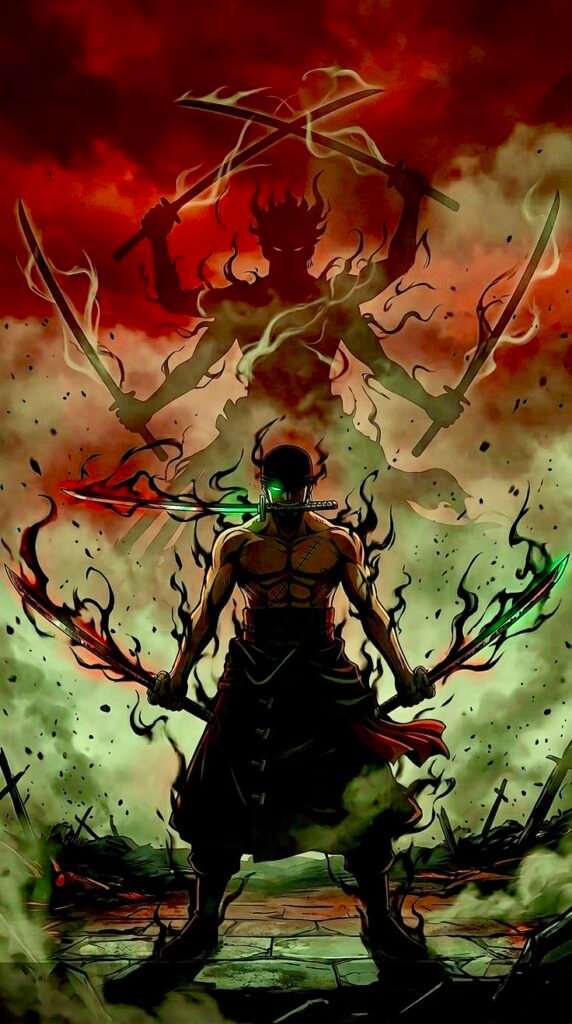
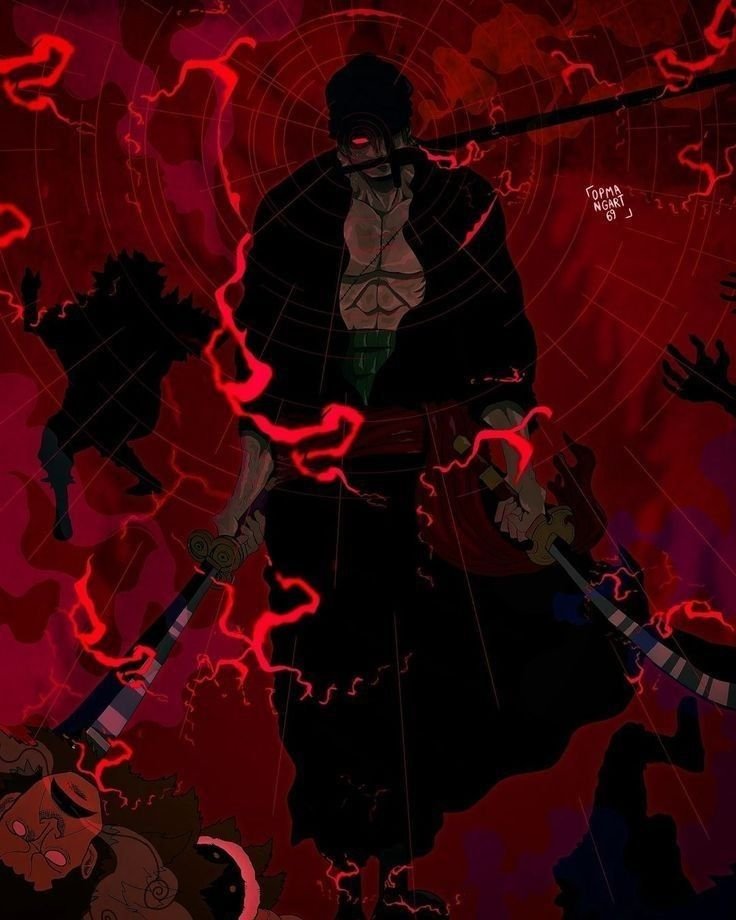
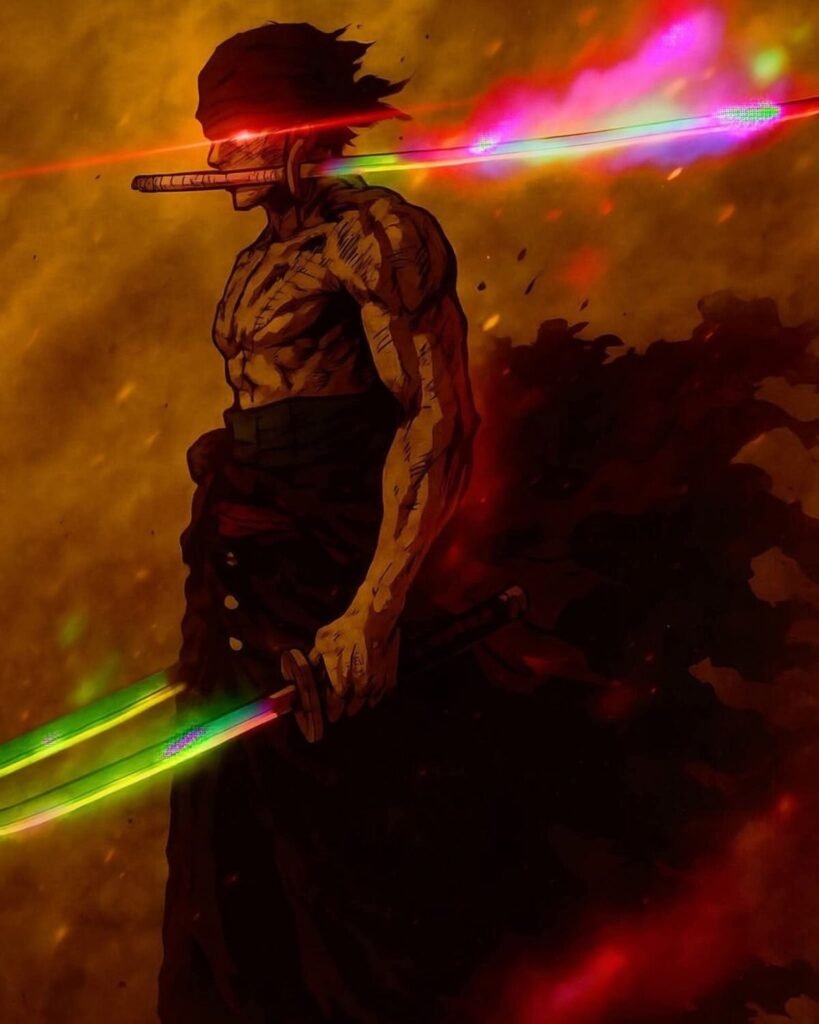
King of Hell Three Sword Style (En’ō Santōryū) is Zoro’s most recent and most powerful technique, developed during the Wano Country Arc using Enma a black-bladed sword once owned by Kozuki Oden, gifted to Zoro by Oden’s daughter Hiyori in exchange for returning his previous sword, Shusui, to its rightful resting place. Enma has a genuinely dangerous drawback baked directly into its canon design: it forcibly drains the wielder’s Haki, which is exactly what allowed Zoro to channel enough Conqueror’s Haki through the blade to wound King, one of Kaido’s strongest subordinates and one of the last surviving members of a nearly extinct race.
Visually, this form combines his classic three-sword stance with visible Haki effects — a black, smoke-like aura bleeding off Enma specifically, distinct from the rest of his swords — and a more exhausted, straining expression that reflects the technique’s real cost, since Zoro physically cannot sustain it for long before risking serious harm to himself. That vulnerability is part of what makes this specific power-up resonate as dramatically as it does within the fandom.
This is the technical, in-the-know pick for PFP purposes recognizable to anyone following the manga or recent anime seasons as “the Wano power-up,” and distinct enough from both the classic look and Ashura to signal genuine familiarity with where Zoro’s story has actually gone.
Manga Zoro PFP
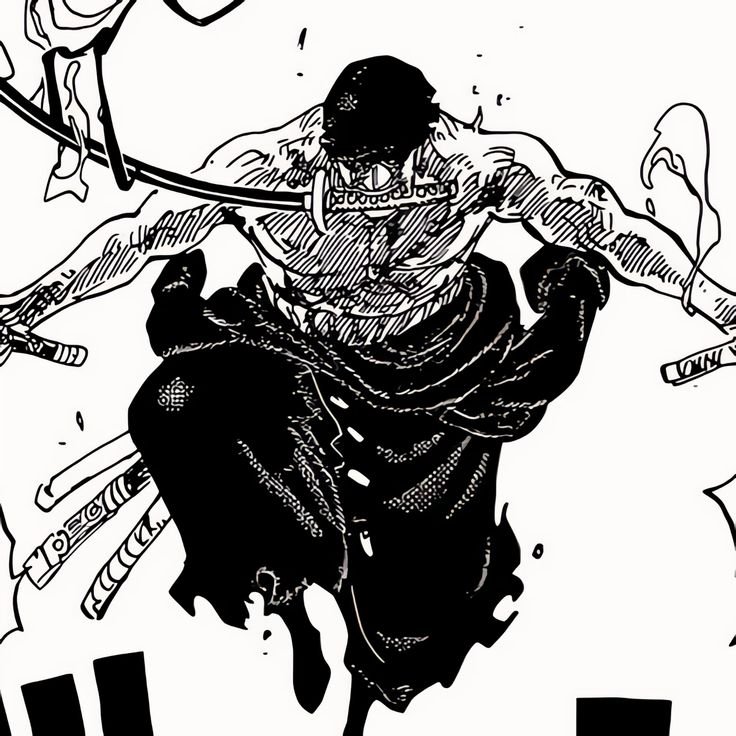
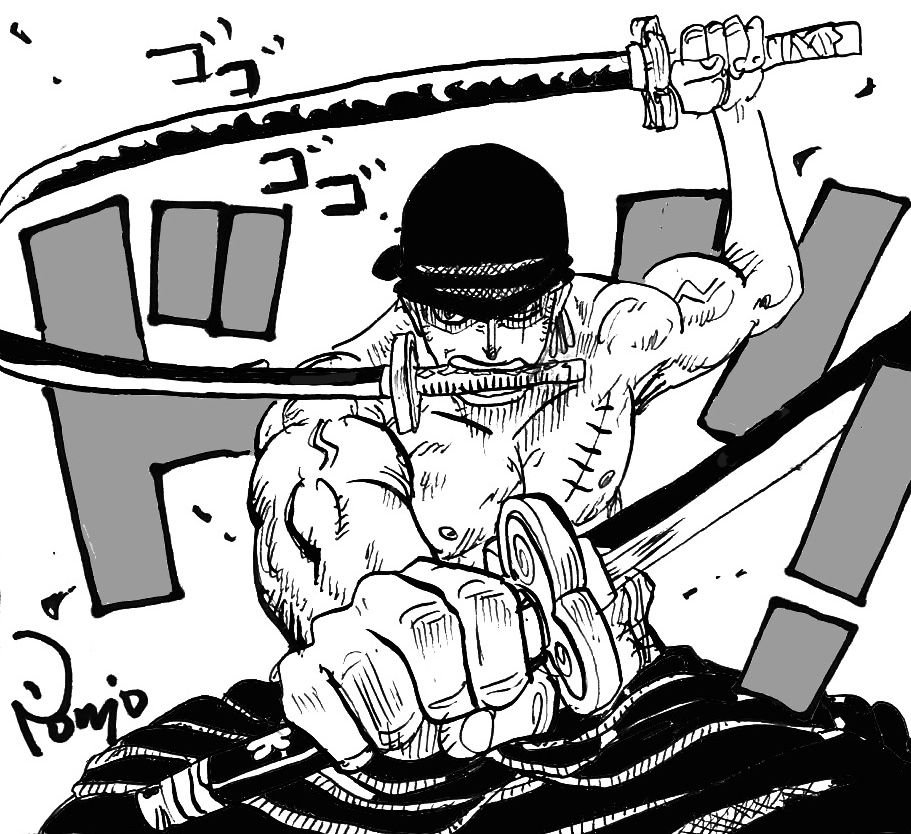
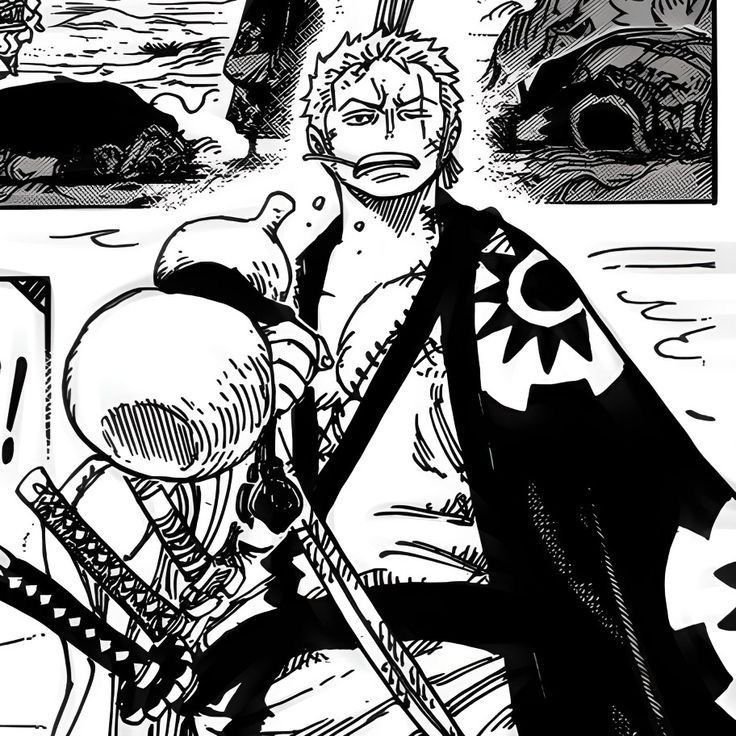
Black-and-white manga panels offer a genuinely different visual register from anime frames, and Zoro’s fight scenes specifically have become a popular subgenre for exactly this reason: Oda’s raw, scratchy linework in panels like the Mihawk duel or the King fight carries a kinetic, unfiltered energy that color and animation budgets can sometimes soften. A dedicated fan-colorization community has grown up around taking these exact panels and rendering them in full color, which is a distinct and separately searched style from either the original black-and-white source or the official anime adaptation.
For PFP purposes, an uncolored manga panel crop carries a specific fandom signal that a colored anime frame doesn’t: it marks the user as someone following the source material directly rather than only the anime, which matters in One Piece communities where manga-versus-anime discourse runs consistently active given how far ahead the manga typically sits.
This category also tends to hold up exceptionally well at small crop sizes, since manga art was originally composed for print reproduction at limited detail levels, making it naturally suited to survive compression on platforms like Discord without losing legibility.
“For more from the Straw Hat crew, browse our full One Piece PFP collection.”
Live-Action Zoro PFP
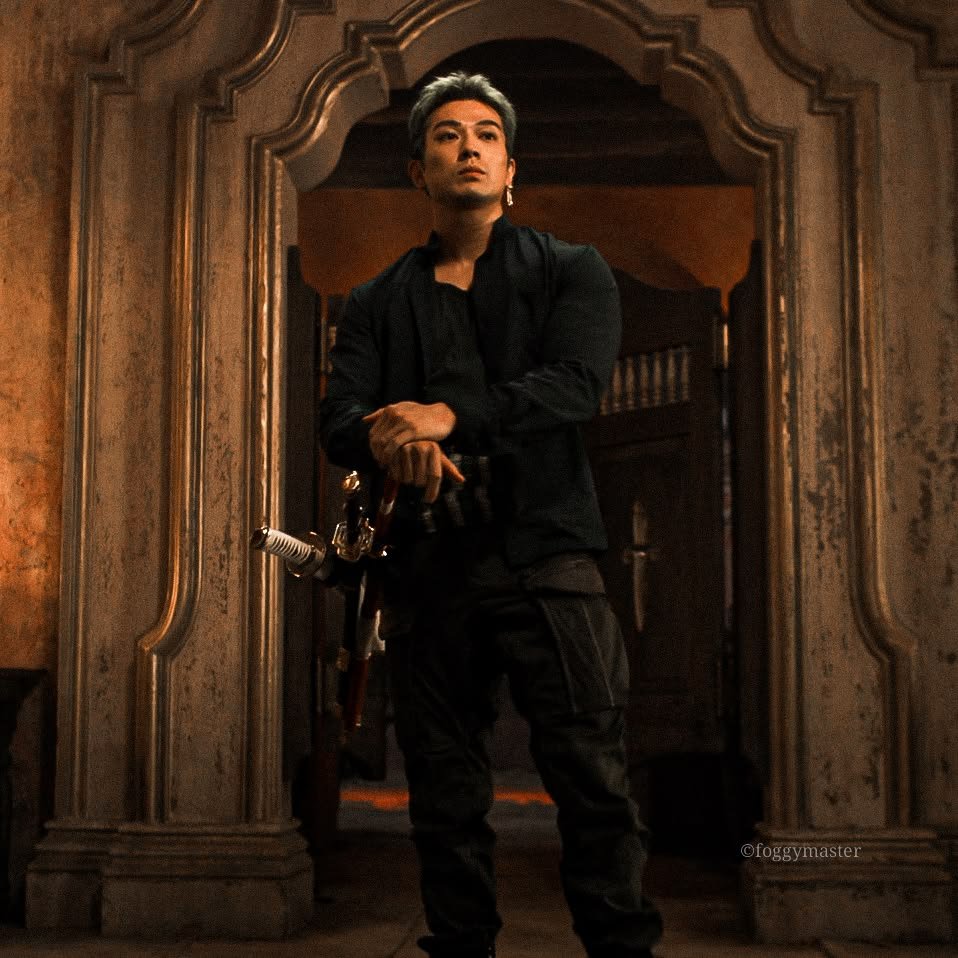
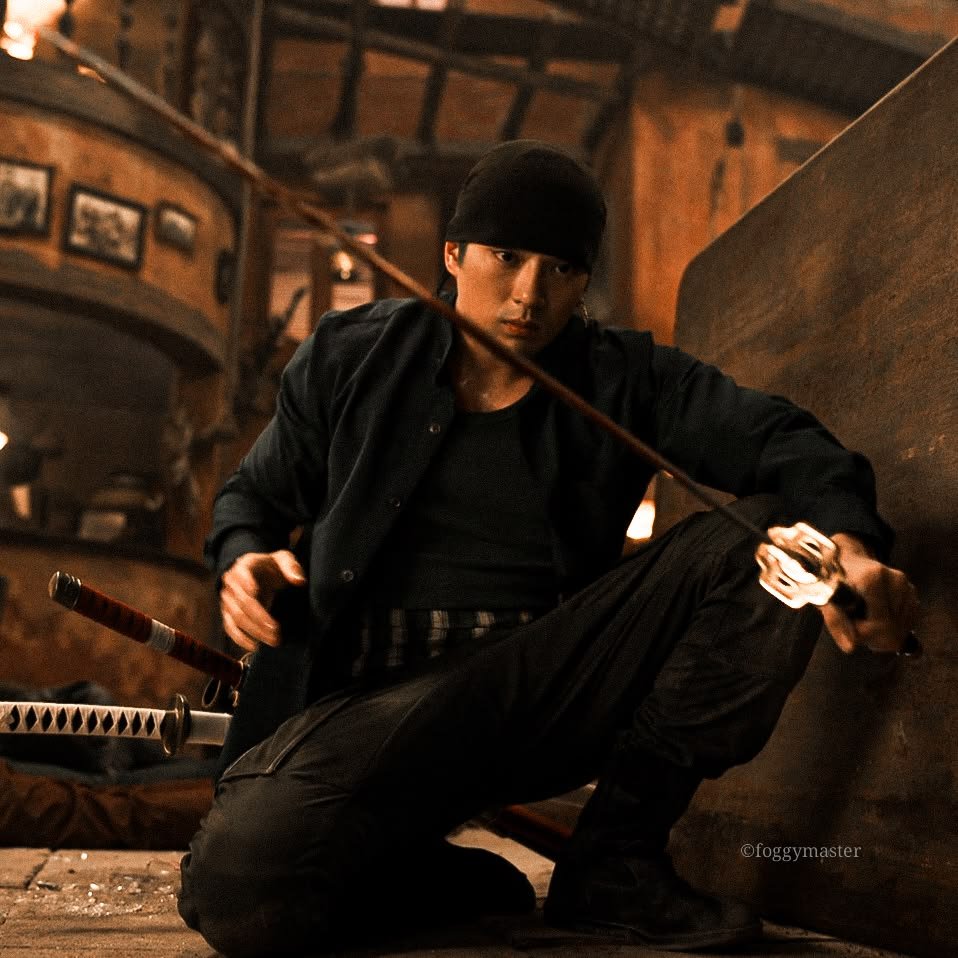
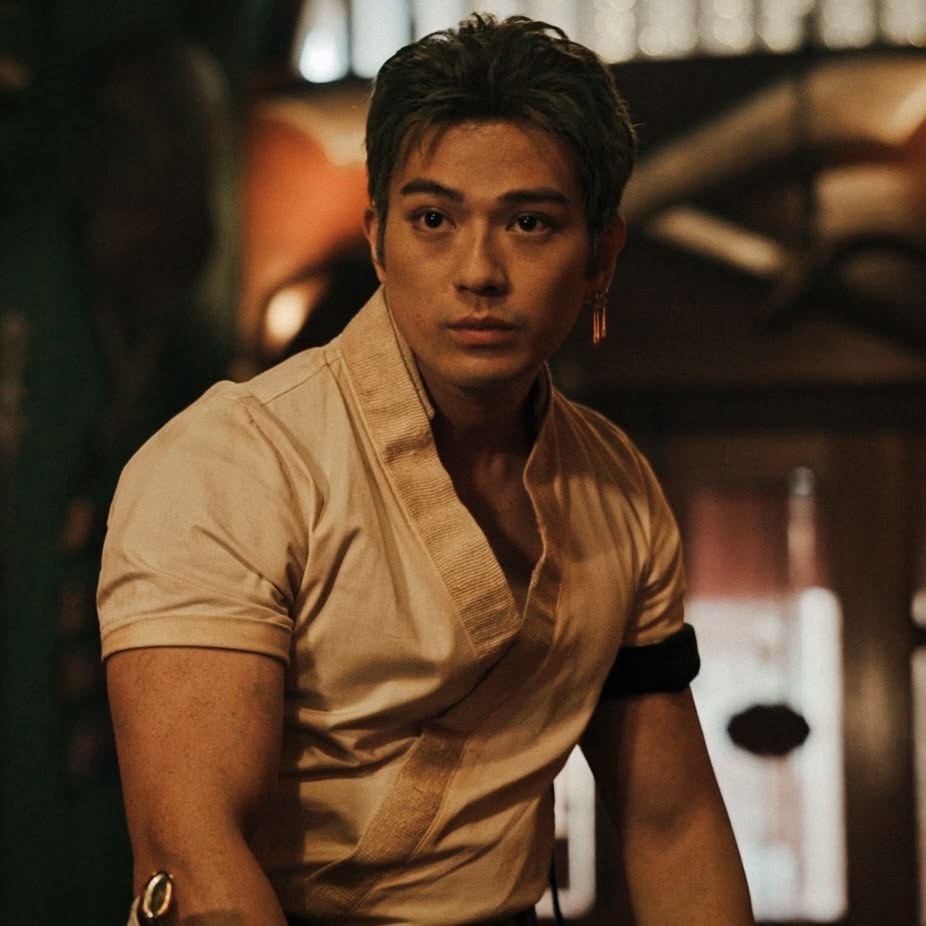
Mackenyu’s portrayal of Zoro in Netflix’s live-action One Piece adaptation has become a genuinely distinct visual source in its own right, separate from both the manga and anime versions covered above. The actor performed his own stunts, including the sword choreography, and had his ears pierced specifically to match Zoro’s signature three earrings a level of commitment to matching the character’s exact design details that’s become a specific point of fan appreciation rather than just casting trivia.
Visually, the live-action version translates Zoro’s core silhouette green hair, black haramaki, three swords into a grounded, textured aesthetic distinct from both the sharp linework of the manga and the flatter color palette of the anime, with more realistic lighting and fabric detail that reads differently in a PFP crop than either source material.
Timely pick: with Season 2 released March 10, 2026, and Season 3 already confirmed, a live-action Zoro PFP right now signals active, current engagement with the adaptation specifically a genuinely different statement from the far more common anime or manga picks, and one most existing Zoro PFP roundups still don’t cover as its own category.
How to Choose the Right Roronoa Zoro PFP
- Match the era to your fandom depth: the Classic Three Sword Style look is universally recognizable; King of Hell and Ashura signal deeper familiarity with specific arcs.
- Check contrast at small size: Zoro’s green hair reads well compressed, but verify his facial details and earrings stay visible once shrunk to Discord’s smallest display.
- Pick manga or anime deliberately, not by default: black-and-white panels signal source-material loyalty; colored anime or live-action frames read as more casual-friendly.
- Coordinate banner and avatar on Discord: his consistent black-and-green palette pairs easily with ship-deck or dojo scenery without needing custom edits.
- Use current-season stills for genuine 4K quality: Wano-arc and Elbaph-arc frames currently offer sharper detail than older, widely recirculated East Blue-era screenshots.
- Consider a timely pick over a default one: a live-action Mackenyu crop signals real engagement with where the adaptation currently stands, rather than defaulting to the same anime frame everyone else uses.
Read: One Piece PFP
Read: Monkey D. Luffy PFP
Read: Miles Morales PFP
Read: Dracule Mihawk vs Roronoa Zoro
Read: Ghost Rider PFP
Frequently Asked Questions
Conclusion
Zoro’s staying power as a PFP subject comes from a genuinely rare combination: instant recognizability from a single silhouette, paired with enough distinct, individually iconic forms classic Santoryu, the demonic Ashura aura, the blood-and-Haki intensity of King of Hell that no two fans need to pick the same image to signal the same fandom. Add in a growing manga-colorization community and a critically praised live-action adaptation building its own separate visual language, and there’s more genuine range here than most single-look anime characters can offer.
With the anime now moving through the Elbaph Arc under its new seasonal format and Netflix’s live-action series confirmed through a third season, 2026 has given Zoro fans more fresh, high-quality source material than most existing roundups have caught up to. Whether the pick is the universally recognizable Classic look, a deeper-cut power-up like Ashura or King of Hell, or the live-action portrayal actively building its own fanbase right now, Zoro’s history has already supplied more distinct, meaningful options than a single default green-haired crop ever could.

4 Comments